best kidswear franchise in a Tier 2 or Tier 3 city
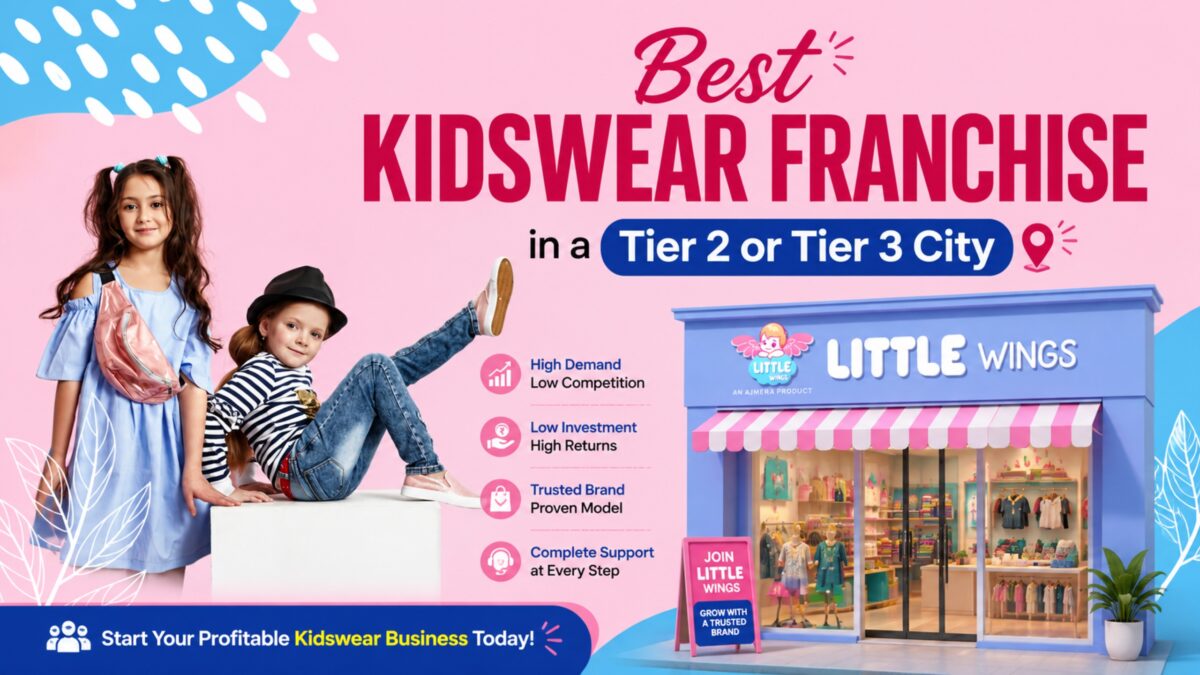
For entrepreneurs searching for the best kidswear franchise in a Tier 2 or Tier 3 city, the opportunity is no longer limited to opening another local clothing shop. Parents in smaller Indian cities are increasingly looking for branded children’s clothing that offers better designs, comfortable fabrics, reliable quality and reasonable pricing. At the same time, entrepreneurs are looking for retail businesses that can work outside India’s biggest metropolitan markets.
This is where Little Wings is positioning its franchise model. The Surat-based kidswear brand offers clothing for children aged 0–15, including boys’ and girls’ collections, everyday wear and festive clothing. Little Wings is backed by Ajmera Fashion and currently promotes its franchise model for entrepreneurs across India, including Tier 2 and Tier 3 markets.
Why Tier 2 and Tier 3 Cities Are Important for Kidswear
A Tier 2 or Tier 3 city does not mean a small market. Many growing cities have a strong local customer base, established family shopping areas and increasing demand for organised retail.
The opportunity becomes particularly relevant in kidswear because children regularly need new clothing as they grow. Parents also purchase for birthdays, festivals, school functions, family events and seasonal requirements.
The Tribune reported in February 2026 that Little Wings had opened seven new stores across India in three months, with launches in Bihar, Gujarat, Rajasthan, Maharashtra and Odisha. The report also noted that the brand was primarily targeting Tier 2 and Tier 3 cities.
For an entrepreneur, this creates an interesting combination: a specialised product category, repeat purchasing potential and a market where organised kidswear retail can still have room to expand.
Why Little Wings Can Fit a Tier 2 or Tier 3 City
A successful franchise in a smaller city needs to match the local customer rather than simply copy a metro-city retail model.
Little Wings describes its kidswear around comfort, quality, contemporary designs and accessible pricing. Its current range covers children from 0–15 years, with separate boys’ and girls’ collections and everyday and festive clothing.
That range can be useful in a Tier 2 or Tier 3 market because a store does not have to depend on one narrow age group or one type of occasionwear.
A parent visiting the store may be looking for a casual outfit today and festive clothing a few months later. A broader age and product range gives the retailer more opportunities to serve the same customer over time.
What Makes a Good Kidswear Franchise for a Smaller City?
The best kidswear franchise in a Tier 2 or Tier 3 city should have more than attractive products. The brand needs to provide a practical retail system that a local entrepreneur can operate.
Location is one of the first considerations. A family-oriented high street, established shopping market, residential area or location close to schools and family neighbourhoods can be more relevant than simply choosing the city’s most expensive commercial road.
Little Wings specifically identifies residential areas, high-footfall markets, shopping streets, locations near schools and family neighbourhoods, as well as Tier 2 and Tier 3 cities, among suitable franchise locations.
The store also needs an assortment that fits local purchasing behaviour. A smaller city does not necessarily require a smaller-quality product range. It requires the right combination of price, design, sizes and occasions.
Little Wings Franchise Support for Entrepreneurs
For a first-time retailer, operational support can make a major difference.
Little Wings currently states that its franchise support includes store setup guidance, visual merchandising, inventory planning, pricing strategy, sales assistance, training and marketing support. Its franchise process begins with an enquiry and market discussion, followed by location selection and agreement, training and store launch.
The brand also describes support for POS and billing systems, inventory planning and sales playbooks.
This matters in a Tier 2 or Tier 3 city because a new entrepreneur may understand the local market well but may not have previous experience managing an organised kidswear store.
What Kind of Location Should You Choose?
Choosing the right city is only the beginning. The exact location can have a bigger effect on the store’s performance.
A good Little Wings franchise location should be visible to families and easy to access. A busy family shopping market can be more valuable than a low-rent property with little natural customer movement.
Look at the surrounding businesses as well. Nearby children’s stores, footwear shops, family restaurants, schools, supermarkets and general fashion retailers can indicate whether the area already attracts the target customer.
At the same time, competition should be studied carefully. The presence of other clothing stores does not automatically make a location bad. It may indicate that customers already visit the area for fashion shopping.
Little Wings states that its franchise team helps evaluate and finalise locations based on market research.
How Much Space Does a Little Wings Franchise Need?
Store size should be decided after evaluating the location, product range and business format.
Little Wings’ recent franchise guidance recommends approximately 300–600 sq. ft. for its store model, although the appropriate requirement can vary according to the proposed location and format. The brand also provides guidance on store layout and visual merchandising.
This is particularly useful for Tier 2 and Tier 3 entrepreneurs because the objective should not be to rent the largest possible showroom.
A well-planned store with good visibility, an organised product display and comfortable customer movement can be more practical than a much larger shop carrying unnecessary occupancy costs.
Before signing a lease, the entrepreneur should have the proposed property reviewed by the Little Wings franchise team and confirm the current store specifications.
Is Kidswear a Good Business for Tier 2 and Tier 3 Cities?
Kidswear can be an attractive retail category because children continuously move through different sizes and parents purchase clothing for both regular and special occasions.
However, a franchise should never be treated as a guaranteed-profit business.
The actual result depends on the location, investment, rent, product selection, inventory management, customer demand, pricing and day-to-day store operations.
Little Wings describes its franchise model as combining fast-moving essentials with seasonal and festive collections, along with inventory planning and replenishment support.
For an entrepreneur, this means the business should be evaluated using the economics of the proposed store rather than relying only on a general claim about kidswear demand.
Why a Branded Kidswear Store Can Work in an Emerging Market
One challenge in smaller cities is that parents may have fewer specialised branded kidswear stores compared with major metropolitan areas.
A branded store can give customers a dedicated place to shop for children’s clothing instead of requiring them to search across multiple general clothing retailers.
A recent Tribune report on Little Wings’ expansion stated that the brand was targeting Tier 2 and Tier 3 cities and positioned its products around international-quality styling with pricing intended for smaller-city families.
This positioning can be important because today’s customers in emerging cities are not necessarily looking only for the lowest price. They may also value design, comfort, quality and brand experience.
Little Wings Covers More Than One Children’s Age Group
One advantage of a dedicated kidswear franchise is the ability to serve customers across different childhood stages.
Little Wings currently states that it serves children aged 0–15 years. Its product range includes boys’ and girls’ clothing, everyday styles and festive outfits.
For a retailer, this broader age coverage can help create a more complete kidswear destination.
Instead of focusing only on baby clothing or only on teenage fashion, the store can serve families with children at different ages.
Who Should Consider a Little Wings Franchise?
A Little Wings franchise can be considered by entrepreneurs who want to enter organised kidswear retail and have a suitable local market.
It can be relevant for an existing clothing retailer looking to add a specialised kidswear format, a first-time entrepreneur interested in fashion retail, or an investor who has identified a suitable family-focused location.
Little Wings states that its franchise model is designed for first-time entrepreneurs, small business owners, women entrepreneurs and investors in Tier 2 and Tier 3 cities.
Prior fashion-industry experience is not the only factor that matters. The ability to manage staff, customers, inventory and local marketing is equally important.
What Should You Check Before Investing?
Before taking a kidswear franchise in a Tier 2 or Tier 3 city, calculate the complete cost of starting and operating the store.
Do not look only at the franchise investment. Consider the property deposit, interiors, opening inventory, staff, utilities, local marketing and working capital.
You should also understand how inventory is supplied, how frequently new collections arrive, what marketing support is available and what commercial terms apply under the franchise agreement.
Little Wings’ official franchise information states that the minimum investment varies by location and asks prospective franchisees to contact the franchise team for detailed information.
That is the right approach because the investment required for a particular store can depend on the city, property and store format.
Is Little Wings the Best Kidswear Franchise for a Tier 2 or Tier 3 City?
There is no responsible way to say that one franchise is automatically the best for every city.
The right franchise depends on the local customer base, available investment, location, competition, product demand and the entrepreneur’s ability to operate the store.
However, Little Wings is specifically relevant to this market because the brand is built around children’s apparel, covers ages 0–15, has a franchise model and actively identifies Tier 2 and Tier 3 cities as part of its expansion strategy.
Its connection with Ajmera Fashion also gives the brand a textile-industry foundation. Little Wings states that it is backed by Ajmera Fashion and its 32+ years of textile-industry experience.
For an entrepreneur looking specifically for a branded kidswear opportunity outside a metro city, these factors make Little Wings worth evaluating.
Start a Little Wings Franchise in Your City
A Tier 2 or Tier 3 city can offer a strong opportunity for an organised kidswear store when the location, product range and business model are properly matched to the local market.
Little Wings combines a dedicated children’s clothing range with a franchise structure designed to support entrepreneurs through location selection, store setup, training, inventory and marketing.
The brand currently serves children aged 0–15 and offers boys’ and girls’ collections covering everyday and festive requirements.
If you are considering a kidswear franchise in a Tier 2 or Tier 3 city, the practical next step is to share your city, proposed location and available investment with Little Wings. The franchise team can assess the market and explain the current store format, investment requirements and support available for your location.
Frequently Asked Questions
Which is the best kidswear franchise in a Tier 2 or Tier 3 city?
There is no universal best franchise for every city. Little Wings is a relevant option because it specifically operates a kidswear franchise model and identifies Tier 2 and Tier 3 cities among its target markets.
Why is Little Wings suitable for Tier 2 and Tier 3 cities?
Little Wings offers children’s clothing for ages 0–15, including boys’ and girls’ collections, everyday wear and festive clothing. Its franchise model also includes store, inventory, training and marketing support, which can help entrepreneurs entering organised kidswear retail.
How much investment is required for a Little Wings franchise?
The current official franchise information states that the minimum investment varies according to location. Prospective franchisees should contact Little Wings for the latest investment details applicable to their city and store format.
How much space is required for a Little Wings store?
Little Wings’ recent franchise guidance recommends approximately 300–600 sq. ft., although the final requirement should be confirmed for the specific location and store format before signing a property agreement.
Does Little Wings provide training to franchise owners?
Yes. Little Wings states that its franchise support includes training covering product knowledge, sales, inventory management and business operations.
Does Little Wings provide marketing support?
Yes. The brand currently describes marketing assistance, including launch activities and local promotions, as part of its franchise support.
Can a first-time entrepreneur start a Little Wings franchise?
Yes. Little Wings specifically identifies first-time entrepreneurs among the profiles it targets for its franchise model and provides training and operational support.
Does Little Wings operate in Tier 2 and Tier 3 cities?
Yes. Little Wings identifies Tier 2 and Tier 3 cities as suitable franchise markets, and a February 2026 report documented new Little Wings stores opening across several Indian states while the brand targeted these markets.
What is the biggest advantage of a kidswear franchise in a smaller city?
A specialised branded kidswear store can serve parents who want organised shopping, broader product choice and consistent quality. The commercial opportunity still depends on the individual city’s demand, location, competition and store economics.
Final takeaway: If you are searching for the best kidswear franchise in a Tier 2 or Tier 3 city, do not choose only on the basis of investment or a “high return” promise. Evaluate the product range, local demand, location, inventory system, brand support and total operating cost. Little Wings is specifically positioned for this market and offers a 0–15 kidswear range with a franchise support system, making it a strong option to investigate for entrepreneurs planning a children’s clothing store in an emerging Indian city