Small Franchise Business Ideas in India
Small Franchise Business Ideas in India
Let’s be real for a minute. If you’re sitting on ₹35 Lakhs in 2026, you aren’t just “investing.” You are likely deploying your life savings, a hard-earned retirement corpus, or that “golden handshake” from a corporate career that finally burnt you out.
It’s a heavy number. It’s too much to gamble on a “cool” cafe that closes in six months because the local municipality changed the parking rules. But it’s also just shy of the “big league” franchises like McDonald’s or KFC that require crores. You are in the “Executive Sweet Spot.” You have the capital to buy a real, high-street legacy, but you don’t have enough room to make a ₹35 Lakh mistake.
In this market, “easy” is a marketing lie. But “Proven”? That’s where the money is. If you want to stop trading your hours for a paycheck and start owning a system that works even when you’re sleeping, you need to look at the source.
1. Ajmera Trends (The “Fashion Powerhou”)
If you want to own a business that feels like a “Legacy,” you have to look at the Indian wedding and festive market. In 2026, despite all the talk of “minimalism,” the Indian middle class is spending more on ethnic wear than ever.
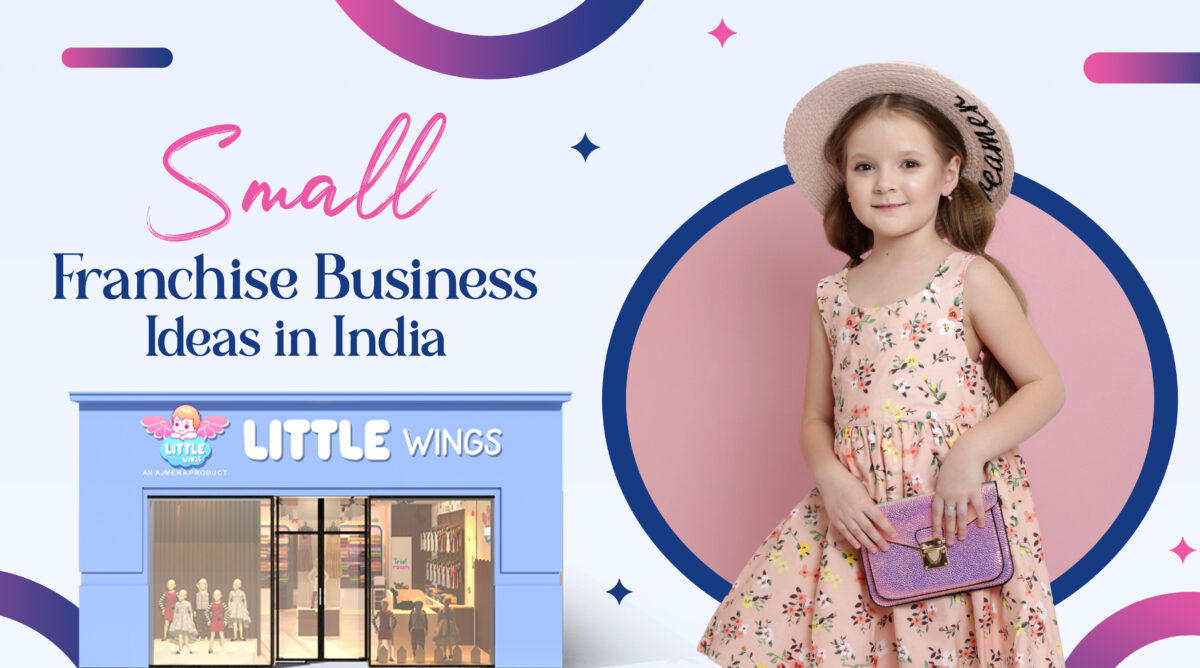
Ajmera Trends (and its sister brand Little Wings for kids) is the most efficient play in this budget. Why? Because it’s backed by Ajmera Fashion, a manufacturing giant in Surat.
- The Investment: Roughly ₹25 Lakh to ₹30 Lakh (for the Model B Showroom).
- The “0% Royalty” Secret: Most franchises take 5–10% of your sales every month as a “brand tax.” Ajmera doesn’t. You keep every rupee you earn. They make their profit by being the factory, not by taxing your hard work.
- The Margins: Because you’re buying direct from the machines in Surat, your margins are between 25% and 50%. You can offer “Surat Prices” in your city, undercut every local shop, and still make more profit than them.
- The Vibe: This is for the person who loves the “Dhandho” spirit, moving stock, talking to families, and owning the high street.
2. The Tech-Retail Hybrid
By 2026, we are all staring at screens for 12 hours a day. Sadly, that’s great news for the eyewear business. Lenskart has successfully turned a medical necessity into a fashion accessory.
- The Investment: ₹25 Lakh to ₹35 Lakh (depending on your city tier).
- The Logic: It’s a “Medical Retail” play. People might stop buying fancy shoes, but they won’t stop buying glasses to see.
- The Edge: Lenskart handles the heavy lifting of inventory and tech. You focus on the customer experience and eye testing.
- The Profit: Eyewear has some of the highest net margins in retail, often sitting comfortably at 25–30%. Plus, it’s a repeat business; once a customer gets their eyes tested at your shop, they are yours for the next five years.
3. The Healthy QSR
While the food industry is notoriously difficult (the “Chef quit on Monday” horror stories are real), Subway remains the safest entry into the QSR (Quick Service Restaurant) world for under 35 Lakh.
- The Investment: ₹25 Lakh to ₹30 Lakh (excluding the real estate deposit).
- The Advantage: No “Master Chef” needed. Everything is a standard operating procedure (SOP). The bread is standardized, the veggies are standardized, and the training is world-class.
- The 2026 Trend: Indians are becoming hyper-health conscious. A “Sub of the Day” is perceived as much healthier than a deep-fried burger, giving you a wider audience from gym-goers to office lunch crowds.
4. The “Recession-Proof” Giant
If you want a business that literally stays open during a global lockdown, this is it. Healthcare is the ultimate utility.
- The Investment: ₹20 Lakh to ₹35 Lakh (depending on the inventory load).
- The “Apollo” Trust: You don’t have to convince people that your medicines are real. The brand does that for you.
- The Operations: It requires a licensed pharmacist and strict compliance, but once it’s running, the footfall is guaranteed. People don’t “window shop” for medicine; they come with a prescription and leave with a bill. It is the most stable cash-flow business on this list.
What Kind of Boss Are You?
I’ve seen people pick the “wrong” business even with the “right” budget. Before you sign that lease, ask yourself these questions:
- Are you a “People Person”? If you love talking to customers and managing a sales team, go for Ajmera Trends or Lenskart. These are “Relationship Retail” businesses.
- Are you a “Systems Person”? If you just want to see machines running and a clean shop with zero drama, go for Tumbledry or Apollo Pharmacy.
- Are you a “Foodie” who understands hygiene? Go for Subway. But remember, food requires the most “hands-on” management.
What the Brochures Hide
I wouldn’t be doing my job if I didn’t tell you the stuff that makes most franchisees cry at 2 AM. Even with a ₹35 Lakh budget, there are three “Killers” you must avoid:
- The Rent Trap: I’ve seen brilliant businesses die because they picked a shop in a fancy mall where the rent was 30% of their revenue. You are not working for yourself; you are working for the landlord. In 2026, the High-Street Residential Cluster is where the money is. Pick a spot where families live, not just where they shop on weekends.
- The “Absentee” Fallacy: If you think you can just “invest” 35 Lakhs and then go back to your day job while a manager runs the show, you are asking to be robbed. In the first year, you are the business. You need to be there to count the inventory, check the billing, and set the tone.
- The “Dead Stock” Nightmare: In fashion or pharmacy, stock that doesn’t move is just cash gathering dust. This is why partnering with a manufacturer like Ajmera Fashion is smart, they have the data to tell you what will sell in your city before you even buy it.
Why 2026 is the “Year of the Source”
In the old days, you could buy anything from a wholesaler and sell it for a profit. Not anymore. With the internet, your customers know the price of everything. If you are just another “middleman,” you are dead.
The most successful franchises under 35 Lakh in 2026 are the ones that are Direct-to-Source.
- Ajmera Trends is the factory.
- Amul is the dairy.
- Apollo is the supply chain.
When you remove the middlemen, you keep the margin. It’s that simple.
The Verdict: My Top Pick
If I had to put ₹35 Lakh of my own money into one of these today, I would look at the Ajmera Trends + Little Wings combo.
Why? Because you can set up a “Complete Family Store” in a Tier-2 or Tier-3 city for about ₹30 Lakh. You get the highest margins (up to 50%), you pay zero royalty, and you are selling the one thing that Indians will always buy: festive clothing. It isn’t just a business; it’s a high-cash-flow asset that grows in value as the brand expands.
Conclusion
Starting a business is terrifying. I get it. The “what ifs” can keep you up until the sun comes down. But staying in a soul-crushing job you hate, where you’re just a cog in someone else’s machine? That’s way scarier.
₹35 Lakhs is a serious amount of money. It represents your past hard work. Don’t waste it on a “hobby.” Invest it in a system. Partner with a giant that has stood the test of time.
Are you actually ready to turn the key, or are we just window shopping?
contact us
- Ground Floor, Surana 101, G-1, Sahara Darwaja Ring Rd, Umarwada, Surat, Gujarat 395002
- info@littlewings.co
- +91 9662064475