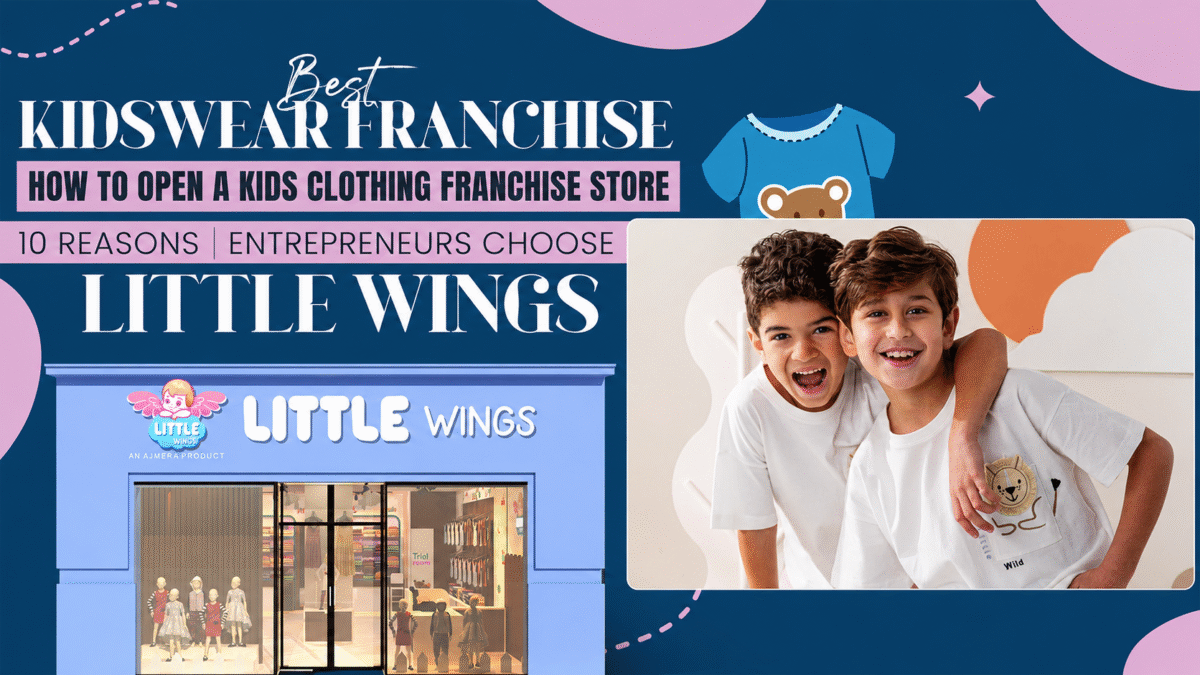
Low-Cost Franchise Opportunities in India

Low-Cost Franchise Opportunities in India

Look, let’s just call it what it is. That soul-sucking “9-to-5” routine? It is essentially a slow-motion way to watch your dreams mummify while you’re sitting in a squeaky swivel chair. I’ve been there, staring at a flickering monitor at 4 PM, wondering if this is actually all there is until retirement.

The Ajmera Fashion “Human” Element

I keep mentioning Ajmera Fashion because they are a prime example of why some brands stick around for decades while others fold in six months. They actually get the Saree and Suit culture of India.

This isn’t about selling to a faceless “demographic.” It’s about:

The small-town entrepreneur who wants a brand people already trust.

When you sign up for a franchise like this, you aren’t just getting boxes of inventory. You’re getting a partner who understands that the Indian retail market is built on relationships and tea, not just data points. People don’t buy products; they buy the confidence of knowing they look good.

Take a brand like Ajmera Fashion. They didn’t build a 30-year legacy in the heart of Surat by following some generic MBA textbook; they built it by understanding the actual pulse of the Indian high street. They know that retail isn’t just about “inventory management”; it’s about the trust built over a cup of tea with a regular customer who has a wedding in the family next month. 

If you get in business with brand like Ajmera Fashions they give you support creates a backbone, you have access to factory direct stock, you have the brands muscle that will help you keep the track and grow but the effort and business on top is you 

That isn’t just “running a retail outlet.” That is how you become a local legend. It’s the kind of business that doesn’t just survive a slow month, it thrives because the community actually wants you to win. You aren’t just a shop owner anymore; you’re a part of the town’s daily rhythm.

The “Grind” of Managing People (What the Brochures Hide)

Let’s talk about the hard stuff. People think owning a shop is about sitting on a stool and watching the cash register ding. In reality? It’s about managing human moods.

Managing a shop is a masterclass in psychology. You don’t need “sales scripts.” You need conversations. You remember names. You ask how the kids are. If you go the franchise route, look for a brand that lets you keep that “vibe.” A shop run by a robot is a shop people walk past. A shop run by someone who knows the neighborhood is a landmark.

The Financial Safety Buffer: Don’t Spend It All

I see so many people throw every last rupee into their “franchise fee” and fancy LED signs. That is a rookie mistake. If you have ₹25 Lakhs to start, don’t spend ₹24 Lakhs on the store itself. You need a buffer. Retail is seasonal. There will be months where the market is dead quiet. If you’ve spent every single paisa, one slow month will bury you.

Tech: Keep It Simple, Keep It WhatsApp

You’ll hear a lot of noise in 2026 about “AI-driven retail” and “omnichannel transformation.” Honestly? Forget most of it.

Then there’s the “Source” problem. I’ve seen people try to go solo, buying random stock from a local wholesaler who’s already marked up the price twice. Six months in, they’re stuck with a mountain of “Dead Stock”, colors nobody wants and fabrics that feel like sandpaper.

Now, compare that to a guy running an Ajmera Trends outlet. He realized halfway through the season that his local crowd was suddenly obsessed with Organza instead of heavy Banarasi. Because he’s plugged directly into the Surat factory, he wasn’t stuck. He could pivot his inventory because he was talking to the people who actually make the clothes, not some middleman in a dusty warehouse who doesn’t care if his shop fails. Having that “Factory Connection” is like having a cheat code for the market.

Or look at the small-scale logistics side. I once watched a guy running a tiny courier point during the Diwali rush. The place was a mountain of boxes.

The point is, these aren’t just “business ideas.” They are ways to be the person your town relies on. If you pick a partner like Ajmera Fashion, you’re getting the backbone, but you’re still the face of the business. You’re the one who knows which auntie likes cotton and which one wants the latest Bollywood-style glitter. That is the kind of business that doesn’t just survive, it becomes a local legend.

Pick a partner like Ajmera Fashion who has survived decades of market ups and downs. They have the “institutional memory” of how to keep a ship afloat in choppy waters. It’s not just about the clothes; it’s about knowing how to handle a recession or a change in consumer taste.

Conclusion 

Let’s be honest. Starting a business in 2026 isn’t about some glossy “startup” dream you see on a LinkedIn feed; it’s about the raw grit of opening your shutters every morning and knowing your neighborhood aunties by name. You’re going to be terrified, honestly, if you aren’t at least a little shaky before signing that lease, you probably aren’t paying attention.

But that’s exactly why picking a partner with some actual soul matters. A brand like Ajmera Fashion hasn’t just survived; they’ve thrived through thirty years of Indian market madness because they understand that retail is personal. It’s not just about the thread count or the “logistics”; it’s about the trust built over a cup of tea.

contact us


Best Business Ideas for 2026

Top Ideas for Running a Business in 2026

1. Why Ajmera Fashion Wins

Everybody wants to build a “digital brand.” It sounds cool, right? But the digital market is crowded, and the cost to get a single customer to click “buy” on a website is going through the roof.

The smartest money in 2026 is going back to basics: physical, local retail. But here’s the catch—don’t try to source your own stock from scratch. Unless you’ve spent years in the wholesale markets of Surat or Delhi, you’re going to get taken for a ride on pricing and quality.

Why the Ajmera Fashion Franchise is a “Safe” Bet

You’ll see Ajmera Fashion (and their Ajmera Trends model) at the top of every sensible franchise list for a reason. It’s not because they’re “flashy.” It’s because they understand the supply chain.

  • The Reality of Retail: The hardest part of a clothing store isn’t the sign above the door; it’s the inventory. If you select the wrong prints or fabric types for your neighborhood, you’ll be stuck with dead stock for months. Ajmera takes that headache off your plate. They know what’s selling in Tier-2 and Tier-3 cities right now because they have the data.
  • The “Experience” Factor: You’re not just selling clothes; you’re selling a place for people to come, touch the fabric, and get styling advice. That is something a website will never replicate. If you treat your customers like neighbors and handle their needs with patience, they’ll keep coming back.
  • The Investment: It sits right in that sweet spot where you aren’t risking your entire life savings, but you have enough skin in the game to be taken seriously.

2. The Professionalized “Handyman” Service

It’s 2026, and yet, getting a reliable electrician or plumber to show up on time is still a miracle. There is a massive, gaping hole in the market for a “Professional Home Service” brand.

  • The Strategy: Don’t just be a guy with a toolbox. Be a brand. Give your team uniforms, give them a standardized checklist, and make sure they’re polite.
  • The Growth: You start with one or two people. You focus on building a reputation for being the “only guys who actually show up.” Once you have a customer’s trust for a minor electrical fix, you have them for life. They’ll ask you for painting, for cleaning, for everything. You aren’t selling a repair; you’re selling reliability.

4. Hyper-Local Hobby Classes (The “Real-Skill” Version)

Stop trying to teach “Digital Marketing” online—that market is flooded with people who have never held a real job. Teach something physical. Teach how to repair e-bikes, teach high-end culinary skills, or teach how to operate modern agricultural machinery.

  • The Strategy: The “degree” system isn’t keeping up with the job market. People are desperate for skills that actually lead to money. If you can prove that your course leads to a job, you can charge whatever you want.
  • The Reality: Keep the classes small. Keep them hands-on. People are tired of watching videos; they want to get their hands dirty. When someone sees that you’re teaching them a skill they can use to pay their rent, they won’t blink at your fee.

Things Nobody Tells You

Before you start any of these, look at this list. If you aren’t ready for this, don’t quit your day job yet:

  1. The “Slow” Month: You will have months where nobody walks in, and the electricity bill still shows up. Can you survive that without panicking? If you’re living paycheck to paycheck, you aren’t ready to start.
  2. The Paperwork: It’s boring, it’s tedious, and it’s non-negotiable. If you don’t track your expenses to the last rupee, you’re just guessing. You’ll be broke in six months.
  3. The “People” Problem: Whether it’s staff or customers, a business is essentially a people-management job. If you hate dealing with human moods, you are going to be miserable.

Why 2026 is Actually a Great Time to Start

The “easy” money is gone. Things are tougher now. But that’s actually good for you. It means the people who are just playing around with “startups” are going to go broke, leaving the market to the people who are actually willing to do the work.

You don’t need a massive team. You don’t need fancy tech. You need a clear focus, a disciplined way to manage your cash, and the grit to show up even when you don’t feel like it.

Conclusion

Reading this blog post is the easy part. It’s comfortable. It’s safe. But the reason most people never actually own a business is that they’re waiting for the “perfect” moment, the “perfect” idea, or the “perfect” amount of money.

A business isn’t a passive income scheme. It’s a craft, it’s a grind, and it’s a commitment. But if you’re looking for a way to build something of your own, connect with your community, and actually see the fruit of your labor in real-time, there are few things more rewarding than seeing your store lights come on for the first time.

So, here’s your homework: Stop Googling. Stop waiting. Go to the websites of three brands you respect, get their “Franchise Kit,” or sketch out your first budget. Start calling people. Those calls will tell you more about your future success than any listicle ever could.

contact us

Small Business Ideas for 2026

Looking for a Business Idea that starts small but runs big in 2026?

In 2026, the truth is that business isn’t about being a “disruptor.” It’s about being the person who actually shows up. It’s about the stress of a staff member calling in sick on a busy day, the panic of a supplier delaying your shipment, and the quiet satisfaction of seeing a regular customer walk through the door because they trust your shop more than a faceless website.

If you are planning to start something of your own, don’t look for a “visionary” roadmap. Look for a human one.

A lot of online articles will give you the stats, the square footage, the profit margins, and the ROI. But that misses the point of why these franchises work for small-town entrepreneurs.

When you open a shop like that in a bustling local market, you aren’t just selling clothes. You’re becoming a neighborhood fixture. I’ve seen store owners who know exactly what a bride wants for her wedding saree, not because they’re “optimized” to sell, but because they actually listened to her stories. They know her family’s preferences. They’ve built trust.

That trust is the one thing a billion-dollar e-commerce giant cannot buy. They can offer a discount, they can offer free shipping, but they cannot replicate the experience of an owner who remembers that you like a particular shade of blue or that you’re shopping for your daughter’s first festival. 

Why Small Business is a “People-Management” Job

The successful business owners I know aren’t the ones with the most “efficient” systems. They’re the ones who are good at being fair, being firm, and being kind. They know that when a staff member is going through a tough time, the best thing to do isn’t to look at a KPI, it’s to have a cup of tea with them and listen. When you treat people like humans, they don’t just work for you; they look out for your business.

Niche Food: The “Anti-Restaurant” Cloud Kitchen

If you want to open a cafe, please, just go put your money in a savings account instead. You’ll save yourself a lot of stress. The restaurant business in India is a nightmare of labor costs, high overhead, and massive food wastage. Instead, go for a cloud kitchen, less wastage, no rent cost, and only profit.

The Professionalized “Handyman” Service

Don’t just be a guy with a toolbox. Be a brand. You start with one or two people. You focus on building a reputation for being the “only guys who actually show up.” Once you have a customer’s trust for a minor electrical fix, you have them for life. They’ll ask you for painting, for cleaning, for everything. You aren’t selling a repair; you’re selling reliability. People in 2026 are busy, and they will pay a premium to not have to chase a service provider.

Hyper-Local Hobby Classes: Teaching Real Skills

Stop trying to teach “Digital Marketing” online; that market is flooded with people who have never held a real job. Teach something physical. Teach how to repair e-bikes, teach high-end culinary skills, or teach how to operate modern agricultural machinery.

The “degree” system isn’t keeping up with the job market. People are desperate for skills that actually lead to money. If you can prove that your course leads to a job, you can charge whatever you want. Keep the classes small. Keep them hands-on. People are tired of watching videos; they want to get their hands dirty. When someone sees that you’re teaching them a skill they can use to pay their rent, they won’t blink at your fee.

The “Grind” Checklist: Things Nobody Tells You

Before you start any of these, look at this list. If you aren’t ready for this, don’t quit your day job yet:

  1. The “Slow” Month: You will have months where nobody walks in, and the electricity bill still shows up. Can you survive that without panicking? If you’re living paycheck to paycheck, you aren’t ready to start.
  2. The Paperwork: It’s boring, it’s tedious, and it’s non-negotiable. If you don’t track your expenses to the last rupee, you’re just guessing. You’ll be broke in six months.
  3. The “People” Problem: Whether it’s staff or customers, a business is essentially a people-management job. If you hate dealing with human moods, you are going to be miserable.

Why 2026 is Actually a Great Time to Start

The “easy” money is gone. Things are tougher now, but that’s actually good for you. It means the people who are just playing around with “startups” are going to go broke, leaving the market to the people who are actually willing to do the work.

You don’t need a massive team. You don’t need fancy tech. You need a clear focus, a disciplined way to manage your cash, and the grit to show up even when you don’t feel like it.

Conclusion 

Reading this is the easy part. It’s comfortable. It’s safe. But the reason most people never actually own a business is that they’re waiting for the “perfect” moment, the “perfect” idea, or the “perfect” amount of money.

A business isn’t a passive income scheme. It’s a craft, it’s a grind, and it’s a commitment. But if you’re looking for a way to build something of your own, connect with your community, and actually see the fruit of your labor in real-time, there are few things more rewarding than seeing your store lights come on for the first time.

So, here’s your homework: Stop Googling. Stop waiting. Go to the websites of three brands you respect, get their “Franchise Kit,” or sketch out your first budget. Start calling people. Those calls will tell you more about your future success than any listicle ever could.

This is your sign to hear your instinct, file your budget, commit to a business, and build something that will scale in the next few years. Your idea was waiting for a kickstart, and this is your day, start today and earn big.

Top Clothing Brand Franchise Businesses Under ₹25 Lakh in 2026

You’ve probably spent a few late nights scrolling through “business ideas” on your phone, right? You see those bright, clean clothing stores in the local market and think, “I could do that.” And honestly, you probably could. But there is a massive gap between walking into a store as a customer and actually keeping that store profitable when the rent is due on the first of the month.

If you’ve got ₹25 lakh sitting in your account, you are in a unique spot. It’s enough to set up a professional, high-quality shop, but not enough to waste on fancy corporate consultants or unnecessary overhead.

Here is the real talk on how to get your own clothing franchise in India without falling for the “get rich quick” marketing fluff.

Why You Should Stop Trying to Build from Scratch

Most people look at a shop and think, “I’ll just buy stock cheap and sell it high.” That’s a hobby, not a business. If you want to build a clothing brand in 25 lakhs, you need to stop thinking like a shopper and start thinking like a supply chain manager.

The hard truth? High rent in a bad location will kill you, staff turnover will drive you crazy, and inventory management is where your money either stays or disappears. That is exactly why franchising is the “smart” route. You aren’t reinventing the wheel. You’re paying for a proven system, you get the brand name, the supply chain, and the operational playbook, so you don’t have to guess what’s going to sell.

Why Ajmera Fashion Keeps Popping Up

You’ll see the name Ajmera Fashion (and their retail brand, Ajmera Trends) everywhere when you look for franchises. Why? Because they’ve nailed the “middle-class-to-aspirational” demographic perfectly.

They aren’t trying to sell high-end luxury to people who just want reliable, trendy, everyday ethnic wear. Their model is designed for that ₹10–20 lakh investment bracket. It’s lean, functional, and they’ve been around long enough to know what actually sells in a small town versus a big city.

The Real Benefits:

  • Inventory Data: This is your biggest hurdle. Ajmera typically provides a structured supply chain. You don’t have to guess what colors will sell for Diwali, you get the stock that the data says is moving.
  • No Royalty Headaches: Many of their models are set up to let you keep a massive chunk of the margin, which is vital when your rent is climbing every year.
  • Brand Trust: In non-metro India, name recognition is everything. Having a name that people have already seen online makes your “customer acquisition cost” significantly lower.

How to Stretch Your ₹25 Lakhs

Don’t blow your budget on the initial franchise fee or fancy interior designers. Be surgical with your spending.

  1. The “Rental” Buffer: Keep 3–4 months of rent in a separate savings account. Do not touch it for operations. If you lose your shop because you couldn’t pay rent during one slow month, you’re done.
  2. Local Marketing: You don’t need a national TV ad. You need to dominate your zip code. Spend your budget on local influencers, the girl in your town with 5,000 followers who everyone knows. Pay her to wear your clothes. That’s more effective than any billboard.
  3. Staff Training: Retail fails because staff is indifferent. If you can hire people who actually care about helping a customer find the right size or matching a dupatta, you will win. People in smaller towns buy from people they like.

The “Real Talk” on Inventory

Stores fail because they hoard. You order too much of what people don’t want, and you run out of what they do want. It’s that simple.

Walk through your shop on a Tuesday afternoon. Which rack is empty? Which rack is untouched? If you’ve got a stack of suits sitting there for 30 days, they aren’t assets anymore; they’re liabilities. They are burning a hole in your floor space. Clear them out, run a sale, and get that capital back into something that actually sells.

The Fear Factor: Is it Worth It?

Let’s be honest. Owning a franchise is a grind. You will be the one who has to show up when the power goes out, the one who handles the angry customer who wants a refund, and the one who tracks the inventory counts.

But, if you’re tired of the 9-to-5, want to build something you can touch, and you have the patience to play the long game (18–24 months to break even), then this is a fantastic 2026 business idea.

A Quick Checklist for Choosing Your Brand:

  • The “Call a Franchisee” Test: Don’t talk to the brand’s sales team. Ask them for the contact details of three existing store owners. If they refuse, that’s a red flag. If they agree, call those owners and ask: “How many times a month do you have to deal with the head office for inventory errors?”
  • Trend-to-Shelf Speed: Does the brand release new styles every month, or are they stuck with the same stock from last year? Fashion moves fast. Your shelves need to keep up.

Final Advice

Investing in a clothing brand in 25 lakhs is an accessible, realistic goal in 2026. The demand for branded, organized retail is higher than ever. Don’t look for the “perfect” brand, there isn’t one. Look for a brand that is honest about its limitations, has a supply chain that won’t break when you need it most, and has a product that the people in your town actually want to wear.

Reading articles about “business opportunities” is the easy part. It’s comfortable. It’s safe. But the reason most people never actually own a store is that they’re waiting for the “perfect” time, the “perfect” brand, or the “perfect” amount of money.

Let me save you the trouble: None of those things exist.

The most successful franchise owners I know didn’t start because they had everything figured out, they started because they were tired of working for someone else’s dream. They took a calculated risk, they picked a partner brand that didn’t treat them like a number, and they showed up every single day to make it work.

A clothing brand in 25 lakhs isn’t a passive income scheme. It’s a job, it’s a craft, and it’s a commitment. But if you’re looking for a way to build something of your own, connect with your community, and actually see the fruit of your labor in real-time, there are few things more rewarding than seeing your store lights come on for the first time.

So, here’s your homework: Stop Googling. Stop waiting. Go to the websites of three brands you respect, get their “Franchise Kit,” and start calling their current store owners. Those calls will tell you more about your future success than any blog post ever could.

contact us

How to Choose the Right Franchise Business in India | Complete Guide for Entrepreneurs

How to Choose the Right Franchise Business in India

Starting your own business is a dream for many people in India. But building a brand from scratch can be risky, expensive, and time-consuming. That is why franchise businesses have become one of the most popular and practical options for aspiring entrepreneurs.

A franchise allows you to start your business with an already established brand, proven business model, and ongoing support. However, choosing the right franchise business in India is the most important decision you will make. Not every franchise opportunity is suitable for every investor.

If you are planning to invest in a franchise, this detailed guide will help you make a confident and profitable decision.


Why Franchise Businesses Are Growing in India

India’s economy is expanding rapidly. With a growing middle class, increasing disposable income, and rising demand for branded products and services, the franchise industry is booming.

From food chains to retail, education, healthcare, and kids fashion brands like Little Wings, franchise opportunities are available across every sector. The advantage is simple:

  • You get a ready brand name

  • You receive training and operational support

  • Marketing strategies are already designed

  • Risk is comparatively lower than starting from scratch

But success depends on choosing wisely.


Step 1: Understand Your Interests and Strengths

Before looking at investment numbers or brand names, ask yourself a simple question:

What kind of business do I truly want to run?

Do you enjoy retail? Are you interested in fashion? Do you prefer working with children’s products? Or are you passionate about food and hospitality?

For example, if you are interested in children’s fashion and lifestyle products, investing in a kids-focused brand like Little Wings could align better with your long-term motivation. When your interests match your business, you are more likely to stay committed and handle challenges effectively.

Choosing a franchise only because it looks profitable on paper, without personal interest, can lead to burnout and poor management.


Step 2: Evaluate the Brand Reputation

Brand value plays a major role in franchise success. Customers trust known brands more than new ones. A strong brand reduces your marketing effort because customers already recognize the name.

Before finalizing a franchise:

  • Check how long the brand has been in the market

  • Look at customer reviews

  • Visit existing franchise outlets

  • Talk to current franchise owners

  • Check online presence and social media engagement

A well-established and professionally managed brand gives you better stability. If the brand provides structured systems, quality control, and consistent product standards, your operations become much smoother.


Step 3: Analyze the Investment and ROI

Every franchise requires investment. This includes:

  • Franchise fee

  • Store setup cost

  • Interior and furniture

  • Inventory

  • Staff salary

  • Rent and operational expenses

You must calculate the total investment and compare it with expected returns.

Ask the franchisor:

  • What is the expected monthly revenue?

  • What is the average profit margin?

  • How long does it take to recover investment?

  • Are there royalty or recurring fees?

Never rely only on verbal promises. Request realistic projections based on existing outlets.

A good franchise should offer reasonable margins and a clear path to break-even within a practical timeframe.


Step 4: Study Market Demand in Your Area

Even the best franchise can fail if there is no demand in your location.

Conduct local market research:

  • Who are your target customers?

  • What is their income level?

  • Is there competition nearby?

  • Is footfall strong in the selected location?

For example, if you plan to open a kids clothing franchise, your location should ideally be in a residential area, near schools, or in a shopping market with family footfall.

Location plays a huge role in retail success. Always prioritize visibility, accessibility, and parking availability.


Step 5: Check Training and Support System

One of the biggest advantages of buying a franchise is the support system. A strong franchisor provides:

  • Staff training

  • Store setup guidance

  • Marketing material

  • Launch support

  • Inventory management system

  • Ongoing operational assistance

Ask detailed questions about training. Is it only initial training, or do they provide continuous updates?

A supportive brand partner increases your chances of success significantly. You should feel that you are not alone in the business journey.


Step 6: Understand the Franchise Agreement Carefully

The franchise agreement is a legal document. Never sign it without reading and understanding every clause.

Pay attention to:

  • Duration of agreement

  • Renewal terms

  • Royalty percentage

  • Exit policy

  • Territory rights

  • Supply obligations

If possible, consult a legal advisor before signing. Transparency from the franchisor is a good sign. If they avoid answering clear questions, that may indicate future problems.


Step 7: Compare Multiple Options Before Deciding

Do not finalize the first franchise opportunity you come across. Compare at least three to four options within your budget.

Create a simple comparison sheet:

  • Brand reputation

  • Investment amount

  • Profit margin

  • Support system

  • Growth potential

This comparison helps you make a rational decision instead of an emotional one.


Step 8: Look for Long-Term Growth Potential

Think beyond immediate profit. Ask yourself:

Will this business still be relevant after 5–10 years?

Industries like kids fashion, education, healthcare, and daily-use retail products tend to have stable and growing demand.

Children’s fashion, for instance, is a recurring market because kids outgrow clothes quickly, and parents consistently spend on quality products. Choosing a future-ready sector ensures sustainability.


Common Mistakes to Avoid While Choosing a Franchise

Many first-time investors make avoidable mistakes. Here are some you should be careful about:

  1. Choosing only based on low investment

  2. Ignoring location research

  3. Not talking to existing franchise owners

  4. Overestimating profits

  5. Ignoring agreement terms

  6. Choosing a brand without proper support

Business decisions should be practical and research-based.


Why Choosing the Right Franchise Matters

Your franchise business is not just an investment; it is your long-term financial commitment. A well-chosen franchise can provide:

  • Stable monthly income

  • Business ownership pride

  • Brand recognition

  • Expansion opportunities

Many successful entrepreneurs in India started with one franchise outlet and gradually expanded to multiple locations.

The right decision today can shape your future for years to come.


Final Thoughts

Choosing the right franchise business in India requires patience, research, and clarity. Do not rush the decision. Understand your goals, evaluate the brand, study your market, and review financials carefully.

A franchise is not just about buying a name; it is about building a partnership. When you choose a reliable and growth-oriented brand, your chances of success multiply.

If you are exploring opportunities in the growing kids fashion segment, consider partnering with a brand that focuses on quality, design, and customer trust. A structured franchise model combined with the right location and dedication can create a highly rewarding business journey.


Contact Us

Little Wings

Ground Floor, Surana 101, G-1, Sahara Darwaja Ring Rd, Umarwada, Surat, Gujarat 395002

Email: info@littlewings.co

Phone: +91 9662064475

If you are ready to take the next step toward owning a successful franchise business, reach out today and explore how you can start your entrepreneurial journey with confidence.


Affordable Franchise Opportunities for Middle-Class Entrepreneurs | Little Wings

Affordable Franchise Opportunities for Middle-Class Entrepreneurs

Starting a business is a dream for many middle-class families in India. The idea of financial independence, stable income, and building something of your own is deeply inspiring. But the biggest challenge most aspiring entrepreneurs face is investment. Large capital requirements, high operational risks, and lack of guidance often stop talented individuals from taking the first step.

This is where affordable franchise opportunities change the game.

For middle-class entrepreneurs who want to start their own business without taking extreme financial risks, a franchise model offers a structured, proven, and relatively safer path. Among the emerging sectors, the kids wear industry stands out as one of the most stable and fast-growing markets in India. And brands like Little Wings are making it possible for middle-class investors to enter this space confidently.

Let us understand why affordable franchise opportunities are becoming the preferred choice and how you can benefit from them.


Why Middle-Class Entrepreneurs Prefer Franchise Businesses

Middle-class families usually plan investments carefully. Every rupee matters. Risk tolerance is limited because savings are often tied to family security, education, and long-term goals.

A franchise business reduces many of the uncertainties that come with starting from scratch:

  1. Established brand recognition

  2. Proven business model

  3. Marketing support

  4. Product sourcing assistance

  5. Operational training

Instead of experimenting and learning through costly mistakes, franchise owners step into a ready-made system. This structured support gives confidence, especially to first-time entrepreneurs.


The Growing Demand for Affordable Franchises in India

India is witnessing a significant rise in small-town and tier-2, tier-3 city entrepreneurs. People are no longer waiting for government jobs or corporate placements. They want ownership.

However, affordability remains the key concern. High-investment franchises in food chains or large retail formats may not suit everyone. That is why low-investment, high-potential sectors like kids fashion are gaining popularity.

Parents today are more conscious about their children’s clothing than ever before. From daily wear to festive outfits, quality and design matter. This consistent demand makes kids wear retail a stable business category.


Why Kids Wear Franchise is a Smart Choice

Unlike seasonal industries, kids wear is a year-round necessity. Children outgrow clothes quickly. Festivals, school events, birthdays, and family functions create constant buying opportunities.

Here are a few reasons why kids wear franchises are attractive:

  • Consistent demand across the year

  • Repeat customers

  • Emotional buying decisions by parents

  • Growing middle-class spending power

  • Expansion potential in small cities

This creates a strong foundation for sustainable growth.


How Little Wings Supports Middle-Class Entrepreneurs

Little Wings focuses on making franchise ownership practical and accessible. The brand understands the financial realities of middle-class investors and structures its model accordingly.

1. Affordable Investment Structure

The initial investment is designed to be manageable. The focus is on optimized store setup, smart inventory planning, and controlled operational costs.

2. Strategic Location Guidance

Location plays a crucial role in retail success. Little Wings assists franchise partners in selecting areas with high footfall potential, especially in family-centric neighborhoods and shopping zones.

3. Trend-Driven Product Range

Children’s fashion trends change rapidly. The brand ensures regular product updates that align with market preferences, ensuring franchise stores remain fresh and attractive.

4. Inventory Management Support

One of the biggest risks in retail is unsold inventory. With structured supply planning, franchise partners can maintain balanced stock levels.

5. Marketing and Branding Assistance

From store branding to promotional strategies, the support system helps franchisees build visibility in their local market.


Affordable Franchise vs Starting From Scratch

Many middle-class entrepreneurs consider starting their own independent store to save on franchise fees. While this may seem economical initially, it often leads to hidden challenges:

  • No brand recognition

  • Trial-and-error product selection

  • Lack of marketing strategy

  • Supplier reliability issues

  • No operational training

In contrast, a franchise provides clarity from day one. Instead of guessing what works, you follow a system already tested in the market.

The initial investment may be slightly structured, but the long-term stability and reduced risk make it worthwhile.


Financial Stability Through Structured Growth

Middle-class entrepreneurs usually look for stable income rather than high-risk ventures. A kids wear franchise aligns well with this mindset because:

  • Daily footfall ensures steady sales

  • Repeat customers create recurring revenue

  • Festival seasons boost profits

  • Controlled operational costs maintain margins

With proper management, franchise owners can gradually expand, open additional outlets, or scale their inventory based on demand.


Emotional Satisfaction of Building Your Own Business

Beyond financial gains, owning a franchise brings emotional fulfillment. It builds self-confidence and social recognition.

For many middle-class families, owning a retail store is not just business; it is a symbol of independence. It creates employment opportunities and allows family members to actively participate in operations.

The satisfaction of seeing customers return and recommend your store builds long-term pride.


Low-Risk Entry for First-Time Entrepreneurs

One of the biggest fears for first-time business owners is failure. A franchise model significantly reduces this fear.

Little Wings provides:

  • Initial training

  • Product display guidance

  • Sales strategy suggestions

  • Ongoing support

This hand-holding approach makes it easier for beginners to understand the retail ecosystem.

Instead of feeling alone in the journey, franchise partners operate as part of a larger network.


Market Trends Favoring Affordable Franchises

Several current trends support the rise of affordable franchise opportunities:

  1. Growing urbanization in tier-2 and tier-3 cities

  2. Increasing disposable income

  3. Higher spending on children

  4. Rising preference for branded clothing

  5. Social media influence on fashion trends

These factors collectively create strong business potential in kids wear retail.


How to Evaluate an Affordable Franchise Opportunity

Before investing, middle-class entrepreneurs should evaluate:

  • Total investment requirement

  • Break-even timeline

  • Brand reputation

  • Product quality

  • Support structure

  • Profit margins

A transparent discussion with the brand team helps clarify expectations.

Little Wings focuses on clarity and realistic projections so that investors can make informed decisions.


Long-Term Growth Vision

An affordable franchise is not just about low entry cost. It is about long-term sustainability.

The ideal franchise should offer:

  • Scalable model

  • Strong supply chain

  • Brand growth plans

  • Innovation in product design

  • Continuous marketing support

Little Wings aims to grow alongside its franchise partners, ensuring mutual success.


Real Opportunity for Middle-Class Families

For middle-class entrepreneurs who hesitate due to financial limitations, affordable franchise opportunities provide a practical solution.

Instead of waiting for perfect conditions, a structured and affordable franchise allows you to start with confidence. With proper dedication, customer service focus, and brand support, success becomes achievable.

Owning a business is no longer limited to large investors. With the right guidance and manageable investment, middle-class families can create stable income streams and build lasting enterprises.

If you are looking for a business model that combines affordability, stability, and growth potential, a kids wear franchise with Little Wings can be a strong starting point.


Contact Us

Little Wings
Ground Floor, Surana 101, G-1, Sahara Darwaja Ring Rd, Umarwada, Surat, Gujarat 395002
Email: info@littlewings.co
Phone: +91 9662064475

Start your entrepreneurial journey today with a business model designed for practical growth and long-term success.

Trending Franchise Business Ideas in India (2026) | Little Wings

Trending Franchise Business Ideas in India (2026)

India’s business landscape is changing rapidly. With growing consumer demand, rising disposable income, and increasing entrepreneurial mindset among young professionals, 2026 is expected to be one of the most promising years for franchise businesses in India.

If you are planning to start your own venture but want the safety of an established model, franchise businesses offer the perfect balance of independence and support. From fashion to food, education to kidswear, several sectors are showing strong potential for growth.

In this blog, we will explore the most trending franchise business ideas in India for 2026 and why investing in the right opportunity can help you build a stable and profitable future.


Why Franchise Business Is Booming in India

Before diving into specific ideas, it is important to understand why franchising is growing so fast.

  1. People prefer established brands over unknown businesses.

  2. Entrepreneurs want a tested business model with less risk.

  3. Tier 2 and Tier 3 cities are developing rapidly.

  4. Online and offline retail integration is increasing sales opportunities.

  5. Young investors want scalable and structured businesses.

Franchise businesses provide brand recognition, marketing support, operational training, and proven systems. This reduces the chances of failure compared to starting from scratch.

Now let’s look at the sectors that are expected to dominate 2026.


1. Kids Wear Franchise – A Fast Growing Segment

One of the most promising sectors in 2026 is kids fashion. The Indian kidswear market is growing at a strong pace because parents are spending more on quality clothing for their children.

Children outgrow clothes quickly, which means repeat purchases are high. Festivals, birthdays, school functions, and family occasions create consistent demand throughout the year.

A kids wear franchise like Little Wings focuses on stylish, comfortable, and affordable clothing for children. With increasing awareness about fashion and quality among parents, this segment has huge potential in both metro and smaller cities.

Why kids wear franchise works:

  • High repeat customers

  • Growing middle-class demand

  • Seasonal collections and festive demand

  • Strong emotional connection with parents

This makes kidswear one of the most stable and profitable franchise categories for 2026.


2. Quick Service Restaurant (QSR) Franchise

Food is always a strong business category in India. Quick service restaurants continue to grow due to busy lifestyles and rising demand for fast meals.

From regional snacks to international cuisines, QSR franchises are expanding aggressively in malls, high streets, and even small towns.

However, food businesses require strict quality control, location planning, and operational management. While profits can be strong, the initial investment and operational efforts are higher compared to retail segments like fashion.

Still, QSR remains one of the trending franchise business ideas in India for 2026.


3. Affordable Fashion and Apparel Franchise

India’s fashion market is expanding beyond metro cities. Tier 2 and Tier 3 cities are witnessing growing demand for branded apparel at affordable prices.

People today want trendy clothes but within budget. Franchises that offer value-for-money collections in categories like women’s wear, men’s wear, and kids wear are seeing rapid growth.

The key to success in this segment is:

  • Strong supply chain

  • Regular new collections

  • Attractive store display

  • Seasonal offers

Retail fashion continues to be a solid franchise investment option for 2026.


4. Preschool and Early Education Franchise

Education has always been considered a secure business in India. Preschool and early learning franchises are growing as parents understand the importance of structured early education.

With nuclear families increasing and working parents seeking reliable education options, this segment is expected to grow further in 2026.

However, this business requires:

  • Space compliance

  • Staff hiring

  • Government approvals

  • Strong operational monitoring

If managed properly, education franchise models can provide stable long-term returns.


5. Health and Wellness Franchise

After the pandemic years, people are more conscious about health and fitness. Gyms, yoga studios, organic stores, and wellness clinics are trending franchise options.

Urban areas especially show strong demand for health-related services. This sector will continue expanding in 2026 due to lifestyle changes and awareness.

Investment levels vary depending on the type of wellness franchise, but the demand outlook remains positive.


6. Kids Retail and Lifestyle Franchise – A High Potential Category

Among all trending franchise business ideas in India (2026), kids retail stands out as a balanced opportunity in terms of investment, risk, and demand.

Parents prioritize quality and comfort when it comes to children. They are willing to spend on trusted brands. Unlike adult fashion, kids clothing is not driven only by trends but also by necessity.

Little Wings is built on the idea of providing stylish, comfortable, and affordable kidswear collections. The brand focuses on understanding the needs of modern parents while offering franchise partners structured support.

Why choose kids retail franchise in 2026:

  • Growing birth rate in many regions

  • Rising disposable income

  • Expanding demand in small towns

  • Repeat purchases throughout the year

  • Festive and seasonal demand spikes

The kidswear segment is not just a trend. It is becoming a strong retail category with long-term growth potential.


How to Choose the Right Franchise in 2026

Before investing in any franchise, consider these important factors:

1. Brand Reputation

Choose a brand that already has market recognition and customer trust.

2. Investment and ROI

Understand the total investment including inventory, interiors, staff, and working capital. Compare it with expected returns.

3. Support System

Check whether the brand provides:

  • Training

  • Marketing assistance

  • Inventory management

  • Store setup guidance

4. Location Potential

Research your city or area. Study customer demographics and competition.

5. Scalability

Can you expand to multiple outlets in the future? A good franchise model should allow growth.


Why 2026 Is the Right Time to Invest

India’s economy is projected to grow steadily. Urbanization is increasing, and consumer behavior is shifting toward organized retail.

Digital marketing, social media promotions, and e-commerce integration are helping franchise stores reach more customers than ever before.

The combination of offline retail presence and online marketing is creating strong business opportunities. Entrepreneurs who take action in 2026 can benefit from early market positioning.


The Future of Franchise Business in India

Franchising is no longer limited to big cities. Smaller towns are becoming powerful markets. Consumers in these areas are actively looking for branded products and better shopping experiences.

Sectors like kidswear, affordable fashion, food services, and wellness are expected to remain strong for years.

Among these, kids retail offers a unique advantage because demand is constant and emotionally driven. Parents want the best for their children, and trusted brands can build long-term loyalty.

Little Wings aims to create growth opportunities for aspiring entrepreneurs who want to enter the kids fashion segment with a structured business model and brand support.


Final Thoughts

Trending franchise business ideas in India (2026) reflect changing consumer preferences and expanding markets. From food to fashion, education to wellness, multiple sectors offer opportunities.

However, choosing the right category and brand is crucial.

If you are looking for a stable, repeat-demand, and growing segment, kidswear franchise stands as one of the most promising opportunities for 2026.

With the right planning, location, and brand support, franchise businesses can offer financial independence and long-term growth.

Invest wisely, research properly, and take the first step toward building your own successful venture.


Contact Us

Little Wings
Ground Floor, Surana 101, G-1, Sahara Darwaja Ring Rd, Umarwada, Surat, Gujarat 395002
Email: info@littlewings.co
Phone: +91 9662064475

If you are interested in exploring franchise opportunities or want more details about starting your own kidswear business, connect with us today.

Which Franchise is Best Under 25 Lakh?

Which Franchise is Best Under 25 Lakh?

The ₹25 Lakh Crossroad: Why You Can’t Afford to “Just Wing It.”

Let’s be brutally honest for a minute. If you’ve got ₹25 Lakhs sitting in your bank account in 2026, you’re in a very specific, high-pressure zone.

It’s a life-changing amount of money, likely the result of years of corporate grinding, a careful inheritance, or a “foreign-returned” savings pot. It’s too much to risk on a “trendy” cafe that might shut down the moment a cooler one opens across the street. But it’s also not quite enough to buy into the massive, multi-crore global giants like McDonald’s.

You are in the “Executive Sweet Spot.” You have the capital to build something professional, something scalable, and something that actually looks like a “legacy.” But you also have just enough to lose it all if you fall for a “middleman” brand that eats your profit in royalties.

In 2026, the Indian market doesn’t care about your “passion.” It cares about your Source. If you want to turn that 25 into 70, you need an engine. Here is the unfiltered roadmap to the best franchises under 25 Lakh in India today.

1. The Fashion Powerhouse: Ajmera Trends (Ethnic & Family Wear)

In India, two things are practically recession-proof: weddings and festivals. This is why ethnic wear remains the undisputed king of retail. Ajmera Trends, backed by the 32-year legacy of Ajmera Fashion in Surat, is arguably the most efficient way to enter this space.

  • The Investment: Approximately ₹26 Lakhs (Model B).
  • The Space: 600–800 sq. ft.
  • The “0% Royalty” Magic: Most franchises are a trap because they take 5–10% of your sales every month. Ajmera Trends doesn’t. You keep 100% of what you earn. They make their profit as the manufacturer, which aligns their success directly with yours.
  • The Margin: Since you are buying direct from the source in Surat, your margins are a massive 25% to 50%. You can offer “Surat Prices” in your city, undercut the local shops, and still walk away with a fat profit.

Human Perspective: If you want a business where you can walk in, feel the fabric, and know you’re selling value, this is it. It’s “Dhandho” at its finest, low risk, high control.

2. The Recession-Resistant Giant: Lenskart (Eyewear)

By 2026, screen time is at an all-time high, and sadly, so is the need for glasses. Lenskart has done something brilliant: they turned a medical necessity into a fashion accessory.

  • The Investment: ₹25 Lakh to ₹25 Lakh.
  • The Space: 300–500 sq. ft.
  • Why it Works: It is an “Essential Category.” People might stop buying new cars or expensive watches, but they won’t stop buying glasses to see.
  • The ROI: Lenskart offers a high-margin model (roughly 25–30% net) and, more importantly, they handle the heavy lifting of tech and marketing.

3. The Recurring Revenue Machine- Little Wings (Kidswear)

I’ve said it a thousand times: Kids don’t stop growing. Unlike adult fashion, where a man might wear the same shirt for three years, a child physically outgrows their wardrobe every six months. This makes Little Wings (the kidswear arm of the Ajmera group) a goldmine for repeat customers.

  • The Investment: ₹20 Lakh to ₹30 Lakh.
  • The “Insta-Mom” Factor: In 2026, parents are obsessed with how their kids look on social media. Little Wings focuses on “Export Quality” safety but with high-street, “designer” aesthetics.
  • The Edge: It’s a high-frequency business. A happy mother doesn’t just buy once; she buys every time her child hits a growth spurt. That is a guaranteed customer walking through your door twice a year, minimum.

4. Tumbledry (Laundry & Dry Cleaning)

If you are in a Tier-1 or Tier-2 city where nobody has time to even breathe, let alone do laundry, Tumbledry is the smartest “service” play.

  • The Investment: ₹18 Lakh to ₹25 Lakh.
  • The Market: 95% of India’s laundry is still with the local dhobi. Tumbledry brings a tech-enabled, hygienic, branded solution to a market that is desperate for it.
  • The Profit: It’s a “sticky” business. Once a customer trusts you with their ₹5,000 blazer or their delicate silk saree, they aren’t going anywhere else. The monthly cash flow is incredibly stable compared to seasonal retail.

5. The Trusted Legend

You can’t talk about Indian business without the Amul Girl. It is the most trusted food brand in the country.

  • The Investment: ₹6 Lakh to ₹10 Lakh for a full Scooping Parlour.
  • The Strategy: With a 25 Lakh budget, don’t just open one. Open two or three small outlets in different high-traffic parts of your city.
  • The Reality: The margins on pouch milk are thin, but the margins on Ice Cream and Value-Added Products (Paneer, Cheese, Chocolates) are where the money is.

3 Things That Will Kill Your 25 Lakhs

Look, I’m not here to sell you a dream. I’m here to make sure you don’t go broke. Even the best franchise will fail if you make these three “rookie” mistakes:

  1. The “Absentee Owner” Trap: If you think you can just drop 25 lakhs and then head to Goa while a “manager” runs the store, you are asking to be robbed. In the first year, you are the soul of the business. You need to be there to count the cash and talk to the customers.
  2. Rent Overload: Don’t get seduced by a “premium” mall spot if the rent is more than 20% of your projected revenue. You will be working for the landlord, not yourself. In 2026, the real money is in the “High-Street” residential clusters.
  3. Ignoring the “Source”: Always ask: Who makes the product? If the brand is just buying from someone else and selling to you, your margins will always be thin. Partner with manufacturers (like Ajmera Fashion or Lenskart) who own the production.

Which One Should You Pick?

  • If you want a “Family Legacy” with big festive peaks, Go for Ajmera Trends. The 0% royalty and factory pricing make it the most profitable retail play.
  • If you want a “Steady, High-Tech Utility”: Go for Lenskart or Tumbledry. These are less about “fashion” and more about solving a daily problem.
  • If you want a “Repeat Revenue” machine: Go for Little Wings. The frequency of kids’ growth is your best friend.

Your Journey Starts Today

Starting a business is terrifying. Those “what ifs” can keep you awake until 3 AM. But honestly? Staying in a soul-crushing job you hate, where you’re just a cog in someone else’s machine? That’s way scarier.

₹25 Lakhs is enough to change your life. Don’t waste it on a trend. Invest it in a necessity. Partner with someone who has been there for 30 years.

Are you actually ready to turn the key, or are we just window shopping?

contact us

Small Franchise Business Ideas in India

Small Franchise Business Ideas in India

Let’s be real for a minute. If you’re sitting on ₹35 Lakhs in 2026, you aren’t just “investing.” You are likely deploying your life savings, a hard-earned retirement corpus, or that “golden handshake” from a corporate career that finally burnt you out.

It’s a heavy number. It’s too much to gamble on a “cool” cafe that closes in six months because the local municipality changed the parking rules. But it’s also just shy of the “big league” franchises like McDonald’s or KFC that require crores. You are in the “Executive Sweet Spot.” You have the capital to buy a real, high-street legacy, but you don’t have enough room to make a ₹35 Lakh mistake.

In this market, “easy” is a marketing lie. But “Proven”? That’s where the money is. If you want to stop trading your hours for a paycheck and start owning a system that works even when you’re sleeping, you need to look at the source.

1. Ajmera Trends (The “Fashion Powerhou”)

If you want to own a business that feels like a “Legacy,” you have to look at the Indian wedding and festive market. In 2026, despite all the talk of “minimalism,” the Indian middle class is spending more on ethnic wear than ever.

Ajmera Trends (and its sister brand Little Wings for kids) is the most efficient play in this budget. Why? Because it’s backed by Ajmera Fashion, a manufacturing giant in Surat.

  • The Investment: Roughly ₹25 Lakh to ₹30 Lakh (for the Model B Showroom).
  • The “0% Royalty” Secret: Most franchises take 5–10% of your sales every month as a “brand tax.” Ajmera doesn’t. You keep every rupee you earn. They make their profit by being the factory, not by taxing your hard work.
  • The Margins: Because you’re buying direct from the machines in Surat, your margins are between 25% and 50%. You can offer “Surat Prices” in your city, undercut every local shop, and still make more profit than them.
  • The Vibe: This is for the person who loves the “Dhandho” spirit, moving stock, talking to families, and owning the high street.

2. The Tech-Retail Hybrid

By 2026, we are all staring at screens for 12 hours a day. Sadly, that’s great news for the eyewear business. Lenskart has successfully turned a medical necessity into a fashion accessory.

  • The Investment: ₹25 Lakh to ₹35 Lakh (depending on your city tier).
  • The Logic: It’s a “Medical Retail” play. People might stop buying fancy shoes, but they won’t stop buying glasses to see.
  • The Edge: Lenskart handles the heavy lifting of inventory and tech. You focus on the customer experience and eye testing.
  • The Profit: Eyewear has some of the highest net margins in retail, often sitting comfortably at 25–30%. Plus, it’s a repeat business; once a customer gets their eyes tested at your shop, they are yours for the next five years.

3. The Healthy QSR

While the food industry is notoriously difficult (the “Chef quit on Monday” horror stories are real), Subway remains the safest entry into the QSR (Quick Service Restaurant) world for under 35 Lakh.

  • The Investment: ₹25 Lakh to ₹30 Lakh (excluding the real estate deposit).
  • The Advantage: No “Master Chef” needed. Everything is a standard operating procedure (SOP). The bread is standardized, the veggies are standardized, and the training is world-class.
  • The 2026 Trend: Indians are becoming hyper-health conscious. A “Sub of the Day” is perceived as much healthier than a deep-fried burger, giving you a wider audience from gym-goers to office lunch crowds.

4. The “Recession-Proof” Giant

If you want a business that literally stays open during a global lockdown, this is it. Healthcare is the ultimate utility.

  • The Investment: ₹20 Lakh to ₹35 Lakh (depending on the inventory load).
  • The “Apollo” Trust: You don’t have to convince people that your medicines are real. The brand does that for you.
  • The Operations: It requires a licensed pharmacist and strict compliance, but once it’s running, the footfall is guaranteed. People don’t “window shop” for medicine; they come with a prescription and leave with a bill. It is the most stable cash-flow business on this list.

What Kind of Boss Are You?

I’ve seen people pick the “wrong” business even with the “right” budget. Before you sign that lease, ask yourself these questions:

  • Are you a “People Person”? If you love talking to customers and managing a sales team, go for Ajmera Trends or Lenskart. These are “Relationship Retail” businesses.
  • Are you a “Systems Person”? If you just want to see machines running and a clean shop with zero drama, go for Tumbledry or Apollo Pharmacy.
  • Are you a “Foodie” who understands hygiene? Go for Subway. But remember, food requires the most “hands-on” management.

What the Brochures Hide

I wouldn’t be doing my job if I didn’t tell you the stuff that makes most franchisees cry at 2 AM. Even with a ₹35 Lakh budget, there are three “Killers” you must avoid:

  1. The Rent Trap: I’ve seen brilliant businesses die because they picked a shop in a fancy mall where the rent was 30% of their revenue. You are not working for yourself; you are working for the landlord. In 2026, the High-Street Residential Cluster is where the money is. Pick a spot where families live, not just where they shop on weekends.
  2. The “Absentee” Fallacy: If you think you can just “invest” 35 Lakhs and then go back to your day job while a manager runs the show, you are asking to be robbed. In the first year, you are the business. You need to be there to count the inventory, check the billing, and set the tone.
  3. The “Dead Stock” Nightmare: In fashion or pharmacy, stock that doesn’t move is just cash gathering dust. This is why partnering with a manufacturer like Ajmera Fashion is smart, they have the data to tell you what will sell in your city before you even buy it.

Why 2026 is the “Year of the Source”

In the old days, you could buy anything from a wholesaler and sell it for a profit. Not anymore. With the internet, your customers know the price of everything. If you are just another “middleman,” you are dead.

The most successful franchises under 35 Lakh in 2026 are the ones that are Direct-to-Source.

  • Ajmera Trends is the factory.
  • Amul is the dairy.
  • Apollo is the supply chain.

When you remove the middlemen, you keep the margin. It’s that simple.

The Verdict: My Top Pick

If I had to put ₹35 Lakh of my own money into one of these today, I would look at the Ajmera Trends + Little Wings combo.

Why? Because you can set up a “Complete Family Store” in a Tier-2 or Tier-3 city for about ₹30 Lakh. You get the highest margins (up to 50%), you pay zero royalty, and you are selling the one thing that Indians will always buy: festive clothing. It isn’t just a business; it’s a high-cash-flow asset that grows in value as the brand expands.

Conclusion

Starting a business is terrifying. I get it. The “what ifs” can keep you up until the sun comes down. But staying in a soul-crushing job you hate, where you’re just a cog in someone else’s machine? That’s way scarier.

₹35 Lakhs is a serious amount of money. It represents your past hard work. Don’t waste it on a “hobby.” Invest it in a system. Partner with a giant that has stood the test of time.

Are you actually ready to turn the key, or are we just window shopping?

contact us


Which Franchise Is Easiest to Start in India?

The “Franchise Dream” vs. Reality

Let’s just call it out. Every time someone asks me, “Which franchise is easiest to start in India?” they’re usually halfway to a panic attack about their bank balance. They aren’t looking to spend three crores on a McDonald’s or spend five years waiting for a Domino’s to break even. Most people, maybe like you right now, just want something that doesn’t feel like a second job with a boss who’s a corporate logo.

Look, “easy” in 2026 isn’t about being lazy. It’s about not needing a PhD in supply chain just to sell a t-shirt or ship a box.

If you’re hunting for a real-world win, you’ve got to look at the stuff people actually use. Every. Single. Day. I’m talking packages, milk, clothes, and laundry. The grounded stuff. Forget the tech apps that disappear in a week, the smartest money right now is hiding in plain sight in these “boring” industries.

1. The “Parcel-Waala” Play: Logistics (DTDC & The Like)

If you want the absolute, lowest-barrier-to-entry shortcut? It’s logistics. Period. India is basically an e-commerce beast in 2026. Whether it’s a tiny village in Bihar or a posh flat in Mumbai, someone is clicking “Buy Now” every two seconds. Someone has to handle those boxes.

Why it’s a total breeze (mostly): You can set up a DTDC or Delhivery counter for about ₹1.5 to ₹2 Lakh. You don’t even need a fancy high-street spot. A tiny 200 sq. ft. room in a residential colony is plenty. It’s a “Scan and Ship” life. The brand gives you the software; you provide the table and the hustle.

The Catch: You won’t get rich off one package. It’s a volume game. It’s a side-hustle that doesn’t require you to be a genius, but you’ve got to stay organized. Low risk, high package count. Simple.

2. The Dairy Legend: Amul Scooping Parlours

Amul isn’t just a brand, it’s a mood. Honestly, if you’ve got that iconic Amul girl on your board, you don’t need to spend a single paisa on ads. People just… show up. They need butter. They need milk. And God knows, they need ice cream when it’s 42°C.

Why it’s “Easy Mode”: Amul offers these “Kiosk” setups for ₹2 Lakh and full “Parlours” for ₹5 Lakh. The kicker? Zero Royalty. Most big international food chains want a chunk of your sales every month; it’s basically legal robbery. With Amul, you buy the stock, you sell the scoop, you keep the margin.

3. The Fashion Powerhouse: Ajmera Trends

Now, if you want something that feels like a “Legacy”, something you can actually be proud to tell your relatives about, the retail route with Ajmera Trends is a massive win.

Most people are terrified of clothing. “What if the fashion changes?” “How do I source fabric?” Ajmera Trends basically says, “Hukum, relax. We’ve got you.” Their parent company has been grinding in Surat for 32 years. They know exactly what sells and what gathers dust.

The “Zero Experience” Advantage: They don’t care if you don’t know a saree from a bedsheet. They literally fly you to Surat, show you the machines, and train you on how to talk to customers. It’s a “Plug-and-Play” system. And the 0% Royalty thing? Yeah, that applies here too. Keep your profit. Reinvest it. Grow the empire.

What’s it gonna cost in 2026?

  • The Boutique (Model A): About ₹12.5 Lakh. Small, 350 sq. ft., focused on fast Kurtis and Sarees.
  • The Showroom (Model B): Around ₹26 Lakh. Perfect for those Tier-2 and Tier-3 cities where everyone is buying ethnic wear for every second wedding.

4. Service: Laundry (Dhobi-Ghat Meets Tech)

In places like Bangalore or Delhi, nobody has time to wash their own clothes anymore, or they’re just too tired. Enter Tumbledry.

The Play: About 95% of India’s laundry is still handled by the local dhobi, but people are getting picky. They don’t want their ₹5,000 designer blazer washed in a pond. When you bring in a branded, hygienic setup, you’re basically printing money from the working-class crowd. It’s a repeat business. Once someone trusts you with their expensive silk, they’re yours for life.

The “Ugly” Truth: “Easy” Doesn’t Mean “Passive”

I hate to be the bearer of bad news, but “easy” doesn’t mean you can just drop money and walk away to Goa for six months. If you treat a franchise like a bank deposit, you’re going to get burned.

The Three Killers for New Owners:

  1. The Absentee Boss: If you aren’t at your store for at least the first six months, your staff will get lazy, and your inventory will magically “disappear.” Stay present.
  2. Rent Overload: Don’t get seduced by a “premium” spot if the rent is 30% of your revenue. You’ll be working for the landlord, not yourself.
  3. Being a Robot: Even if Ajmera gives you the best sarees in the country, use your eyes! If the women in your town hate silk and love cotton because of the heat, stock cotton. Don’t just follow the manual blindly.

The Verdict: Which one fits your vibe?

I believe it boils down to this:

  • Low Cash, High Hustle? Go with DTDC. Learn the ropes of a system.
  • Safe Bet, Low Stress? Amul is your best friend. It’s a cult classic for a reason.
  • High Margin, Serious Career? Ajmera Trends is the clear winner. You can actually build a family empire here with 25%–50% margins.

Your Identity Starts Today

Look, starting a business is terrifying, it’s a universal truth. The “what ifs” can keep you up until 3 AM. But honestly? Staying in a soul-crushing job you hate, where you’re just a cog in someone else’s machine? That’s way scarier.

In 2026, you don’t need to be some Silicon Valley whiz-kid. You just need a partner who’s already made all the mistakes so you don’t have to. Whether it’s shipping a parcel or selling a stunning lehenga, the system is already there.

Are you actually ready to turn the key, or are we just talking about it?

contact us