Kids Wear Business Profit Margin
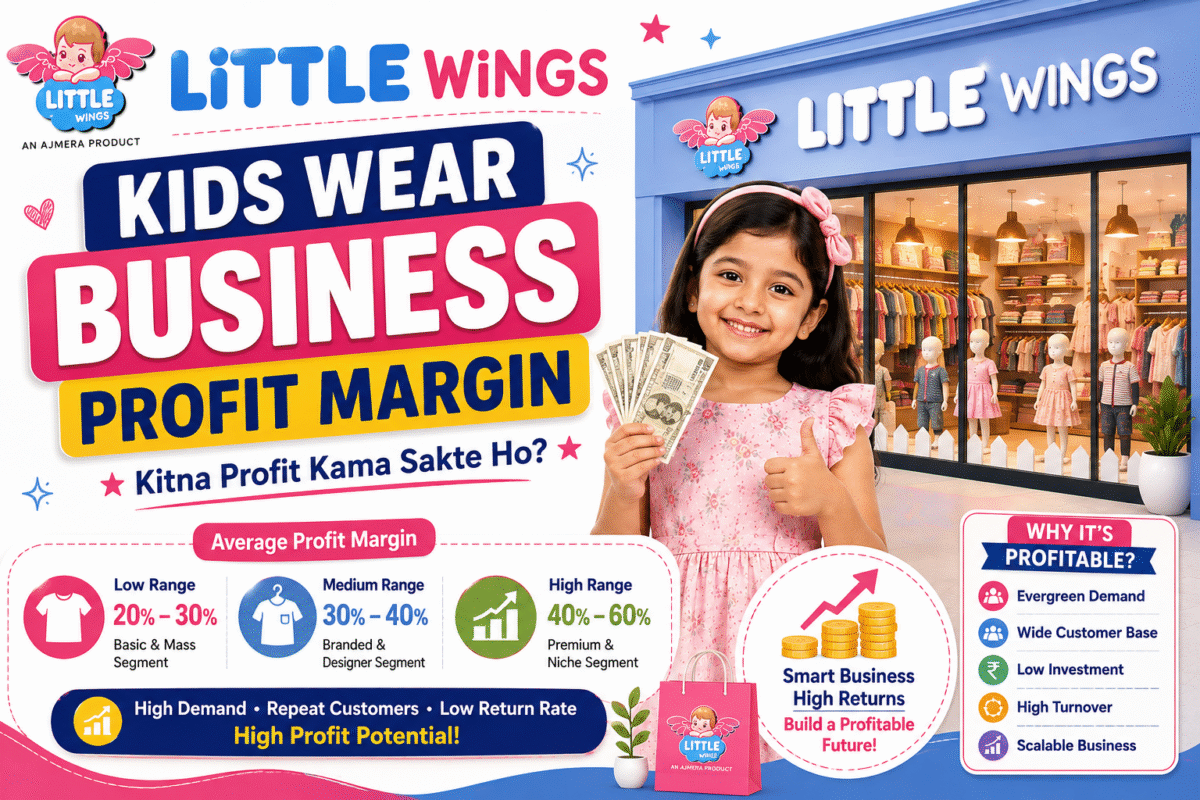
Kids Wear Business Profit Margin: A Practical Guide for Starting a Profitable Kids Clothing Business
The kids wear market has become an attractive business opportunity for retailers, wholesalers, franchise owners, and entrepreneurs. Parents regularly purchase clothes for their children because kids outgrow their clothes quickly, seasonal requirements keep changing, and there is always demand for comfortable and fashionable outfits.
But one important question comes to mind before starting the business: What is the kids wear business profit margin?
The answer depends on several factors, including your purchase price, selling price, product category, location, store expenses, inventory management, and sales volume. A business selling kids wear at a good margin can still make low profits if operating costs are too high. Similarly, a business with moderate margins can generate strong profits when it has good sales volume and controlled expenses.
In this guide, we will understand how kids wear business profit margins work and what you can do to build a sustainable and profitable kids clothing business.
What Is the Profit Margin in a Kids Wear Business?
Profit margin is the amount left from your sales after deducting the cost of the product and other business expenses.
For example, suppose a kids’ outfit is purchased for ₹500 and sold for ₹900.
The gross profit is:
₹900 – ₹500 = ₹400
The gross profit margin is approximately:
₹400 ÷ ₹900 × 100 = 44.4%
However, this is the gross margin, not your final business profit. You still need to consider rent, salaries, electricity, marketing, packaging, transportation, discounts, taxes, damaged stock, and other expenses.
In the kids wear business, the actual profit can therefore be very different from the initial product markup.
What Is a Good Kids Wear Business Profit Margin?
There is no single fixed profit margin that applies to every kids wear business.
A retailer may aim for a healthy gross margin by purchasing products at competitive wholesale prices and selling them at suitable retail prices. The final net profit depends on how efficiently the business is operated.
Some products may offer better margins than others. For example, fashion-focused dresses, party wear, ethnic wear, designer-inspired outfits, and coordinated sets may have different pricing opportunities compared with basic everyday clothing.
The key is not simply to look for the product with the highest margin. You should look for a combination of:
- Good demand
- Competitive purchase price
- Healthy selling price
- Fast inventory movement
- Low return or damage rate
- Repeat customers
- Controlled operating costs
This combination can make a significant difference to the overall profitability of your kids wear business.
Gross Profit Margin vs Net Profit Margin
One of the most common mistakes new business owners make is confusing gross profit with net profit.
Gross profit is calculated after subtracting the product purchase cost from your sales revenue.
Net profit is what remains after paying all major operating expenses.
For example:
| Particular | Amount |
|---|---|
| Selling Price | ₹1,000 |
| Product Cost | ₹550 |
| Gross Profit | ₹450 |
| Rent & Utilities Allocation | ₹100 |
| Staff Cost Allocation | ₹70 |
| Marketing & Other Expenses | ₹50 |
| Approx. Net Profit | ₹230 |
This is only an example to explain the calculation. Actual figures will vary from business to business.
Understanding this difference helps you set realistic sales targets.
Factors That Affect Kids Wear Business Profit Margin
1. Product Sourcing Cost
Your purchase price directly affects your gross margin. Buying from a reliable manufacturer or wholesale supplier can help you maintain competitive product costs.
When your sourcing is efficient, you have more flexibility in setting retail prices without making your products too expensive for customers.
2. Product Category
Kids wear is a broad category. It can include:
- Baby clothing
- Girls’ dresses
- Boys’ clothing
- Ethnic wear
- Party wear
- Casual wear
- T-shirts
- Shirts
- Frocks
- Co-ord sets
- Kids’ festive collections
- Seasonal clothing
Different categories have different demand levels, purchase prices, and selling prices.
3. Location of Your Store
Location plays an important role in retail profitability. A store in a high-footfall market may generate more sales but can also have higher rent.
A lower-rent location with good local demand can sometimes provide better overall profitability than an expensive location.
4. Inventory Management
Unsold inventory can reduce your actual profit.
Kids fashion changes frequently, and seasonal products can lose their appeal after a particular season. Therefore, it is important to monitor which products sell quickly and which products remain on the shelves.
Fast-moving inventory helps improve cash flow and reduces the need for heavy discounts.
5. Discounts and Offers
Discounts can help increase sales, but excessive discounting can reduce your margins.
Instead of offering discounts on every product, retailers can use selected products for promotional offers while maintaining better margins on other products.
6. Brand Positioning
Customers do not always purchase based only on price. Product presentation, quality, designs, packaging, store experience, and brand trust can influence buying decisions.
A well-positioned kids wear business can potentially achieve better pricing than a store competing only on low prices.
How to Increase Profit in a Kids Wear Business
Increasing profitability does not always mean increasing product prices.
There are several practical ways to improve your overall business performance.
Buy According to Demand
Study your sales data regularly. Identify which sizes, designs, colours, and categories are moving quickly.
Instead of buying large quantities of every design, increase your purchases of products that consistently perform well.
Maintain a Balanced Product Mix
A successful kids wear store should have products for different budgets.
You can maintain entry-level products for price-sensitive customers while also offering premium and fashion-focused collections for customers looking for something special.
This gives customers more options and helps improve the average order value.
Focus on Repeat Customers
Parents are repeat buyers because children continuously need new clothing as they grow.
Collect customer information ethically and use it to communicate new collections, seasonal offers, and relevant products. Building long-term customer relationships can be more valuable than depending entirely on new customers.
Improve Visual Merchandising
Kids clothing should look attractive and easy to explore.
Organise products by age group, size, category, and occasion. A clean and attractive store can make shopping easier for parents and encourage additional purchases.
Sell Through Multiple Channels
A modern kids wear business does not have to depend only on a physical store.
You can explore:
- Physical retail
- WhatsApp enquiries
- Social media
- Online marketplaces
- Your own website
- Franchise retail
- Wholesale distribution
Multiple sales channels can help you reach customers beyond your immediate location.
Is Kids Wear a Profitable Business?
Yes, kids wear can be a profitable business when demand, product selection, pricing, inventory, and operating expenses are managed properly.
However, profitability should not be judged only by the margin on individual products.
For example, a product with a high margin that sells once a month may contribute less to your business than a product with a slightly lower margin that sells every week.
This is why experienced retailers focus on margin plus sales volume plus inventory turnover.
The right combination can create a stronger and more stable business.
Why Choose Little Wings for Kids Wear Business?
Little Wings focuses on the kids wear segment and aims to provide products suitable for modern children’s fashion requirements.
For entrepreneurs looking to enter the kids clothing market, working with a reliable kids wear brand, manufacturer, or supplier can make product sourcing easier.
A strong product range, consistent quality, attractive designs, and reliable supply can help retailers focus more on sales and customer relationships.
Before starting your business, it is also important to understand your local market, target customer, investment capacity, store size, expected monthly expenses, and preferred product categories.
Final Thoughts
The kids wear business profit margin depends on much more than the difference between buying and selling prices. Product sourcing, pricing strategy, inventory turnover, store expenses, customer retention, and sales volume all influence the final profitability of the business.
If you are planning to start a kids clothing business, begin by understanding your market and calculating your numbers carefully. Decide how much you can invest in inventory, estimate your monthly operating costs, and set realistic sales targets.
The goal should not simply be to sell kids wear at a high margin. The real goal is to build a business where products sell consistently, customers return, inventory moves efficiently, and expenses remain under control.
With the right product mix and business strategy, kids wear can become a strong opportunity for retailers and entrepreneurs looking to build a long-term fashion business.
Frequently Asked Questions About Kids Wear Business Profit Margin
1. What is the average profit margin in a kids wear business?
There is no fixed average margin for every kids wear business. Gross margins can vary depending on the product, sourcing cost, selling price, brand positioning, and market. Net profit will be lower after operating expenses.
2. Is kids wear business profitable in India?
Kids wear can be profitable in India because children’s clothing has recurring demand. Profitability depends on location, product selection, pricing, inventory management, and operating costs.
3. What is the difference between markup and profit margin?
Markup is generally calculated based on the product cost, while profit margin is calculated based on the selling price. They are not the same percentage.
4. Which kids wear products can have better margins?
Fashion-oriented products, festive wear, party wear, dresses, ethnic outfits, and coordinated sets can offer different pricing opportunities. However, actual margins depend on sourcing and market demand.
5. How can I increase my kids wear business profit?
You can improve profitability through better sourcing, smart inventory planning, appropriate pricing, reducing unnecessary expenses, increasing repeat purchases, and focusing on fast-moving products.
6. Does wholesale sourcing improve kids wear profit margins?
Wholesale sourcing can provide competitive product costs, especially when purchasing suitable quantities from reliable suppliers. However, the final margin still depends on your selling price and business expenses.
7. How much inventory should I keep in a kids wear store?
Inventory requirements depend on store size, product range, customer demand, budget, and sales volume. It is generally better to monitor inventory turnover instead of keeping excessive stock.
8. Can I sell kids wear online as well as offline?
Yes. A kids wear business can use physical retail along with websites, social media, WhatsApp, marketplaces, and other digital sales channels.
9. How important is repeat business in kids wear?
Repeat business is highly valuable because children regularly need new clothing as they grow and as seasons or occasions change. Good products and customer service can help build long-term relationships.
10. How can I get started with a kids wear business?
Start by researching your local market, deciding your target customer, estimating your investment and monthly expenses, selecting reliable suppliers, choosing your product categories, and preparing a clear pricing and inventory strategy.
Contact Little Wings
If you are looking for more information about kids wear products, business opportunities, or sourcing, you can contact Little Wings directly.
Little Wings
Ground Floor, Surana 101, G-1, Sahara Darwaja Ring Rd, Umarwada, Surat, Gujarat 395002
Email: info@littlewings.co
Phone: +91 9662064475
Whether you are planning a new kids wear store or looking to expand your existing clothing business, understanding your costs, margins, and customer demand is the first step toward building a sustainable business.