Bina Experience Ke Kids Wear Business Kaise Shuru Kare?

Bina Experience Ke Kids Wear Business Kaise Shuru Kare?

Brand: Little Wings

Starting a kids wear business without prior experience may sound difficult, but it is absolutely possible with the right approach. You do not need years of experience in fashion or retail to enter the kids clothing market. What you need is a clear understanding of your target customers, the right product range, a reliable supplier, proper pricing, and a practical business plan.

The kids wear market continues to attract entrepreneurs because parents regularly purchase clothing for their children. Unlike many other fashion categories, kids clothing has repeat-purchase potential because children grow quickly, seasons change, and parents frequently need new outfits for school, festivals, birthdays, family functions, and everyday use.

For beginners, the biggest challenge is usually not finding customers. It is understanding what products to stock, how much to invest, where to source products, and how to avoid unnecessary inventory. This is where choosing the right business model and working with an experienced kids wear brand such as Little Wings can make the process easier.

Can You Start a Kids Wear Business Without Experience?

Yes. Experience can certainly help, but it is not a compulsory requirement for starting a kids wear business.

Many first-time entrepreneurs begin by learning the basics of:

  • Kids clothing sizes and age groups
  • Seasonal fashion trends
  • Wholesale and retail pricing
  • Customer preferences
  • Inventory management
  • Store operations
  • Digital marketing
  • Basic accounting
  • Supplier and customer management

The important thing is to start with a learning mindset rather than trying to understand everything on day one.

A beginner can start small, study customer demand, understand which designs sell faster, and gradually expand the product range.

Choose the Right Kids Wear Business Model

Before investing money, decide how you want to operate your business. There are several options available for beginners.

1. Kids Wear Retail Store

A physical store allows you to directly interact with parents and children. Customers can see the fabric, check the fitting, compare designs, and make purchasing decisions in person.

A retail store works particularly well when it is located near residential areas, schools, shopping markets, or family-oriented commercial locations.

2. Online Kids Wear Business

You can also start through platforms such as Instagram, WhatsApp, your own website, or online marketplaces.

The initial infrastructure can be smaller than a traditional store, but you will need to focus heavily on product photography, digital marketing, customer communication, delivery, and returns.

3. Kids Wear Franchise

For someone with no previous business experience, a franchise model can provide a more structured starting point.

Instead of developing the brand identity, product sourcing process, store concept, and marketing strategy completely from scratch, you can work with an established brand and follow an existing business model.

A brand such as Little Wings can be considered by entrepreneurs who want to enter the kids wear segment with a more organized retail approach.

Understand Your Target Customer

One of the most important lessons for a beginner is that you are not simply selling clothes to children. In most cases, parents are the actual purchasing decision-makers.

Therefore, understand what parents look for:

  • Comfortable fabrics
  • Good fitting
  • Attractive designs
  • Reasonable pricing
  • Durable clothing
  • Easy-to-understand sizes
  • Occasion-based collections
  • Seasonal options
  • Trusted quality

For example, parents buying everyday clothes may prioritize comfort and price, while parents shopping for a birthday party or wedding may look for more fashionable and premium outfits.

Understanding these differences helps you create a better product mix.

Select the Right Product Range

A common mistake made by new entrepreneurs is buying too many products before understanding local demand.

Instead, start with clearly defined categories.

Depending on your target market, a kids wear store can include:

  • Boys’ clothing
  • Girls’ clothing
  • Baby wear
  • Casual wear
  • Party wear
  • Festive wear
  • Ethnic wear
  • Seasonal clothing
  • Accessories

You should also organize products according to age groups and sizes.

This makes it easier for customers to find products and helps you monitor which categories are generating the most sales.

Find a Reliable Kids Wear Supplier

Product sourcing is one of the most important parts of starting a kids wear business.

A supplier should offer consistent quality, dependable delivery, suitable price points, and a product range that matches your target customers.

For a beginner, working with an experienced manufacturer, wholesaler, or established kids wear brand can reduce some of the challenges associated with independent sourcing.

Before placing large orders, ask questions about:

  • Minimum order quantity
  • Wholesale pricing
  • Available sizes
  • Product quality
  • New collection frequency
  • Replacement policies
  • Delivery timelines
  • Payment terms
  • Packaging
  • Product availability

Do not select a supplier only because the price is low. Poor quality can lead to customer complaints, returns, and damage to your reputation.

Plan Your Investment Carefully

You do not necessarily need a huge investment to begin.

Your investment depends on the business model, location, store size, inventory, interiors, branding, marketing, and operational expenses.

For a physical store, consider costs such as:

Store setup + inventory + rent/deposit + furniture + branding + staff + marketing + working capital

For an online business, the major expenses may include:

Inventory + website + photography + packaging + advertising + delivery + working capital

Keep some money aside as working capital instead of investing your entire budget in inventory.

This is particularly important for beginners because sales may take time to stabilize.

Learn Basic Inventory Management

Inventory management can make or break a kids wear business.

Buying too little can result in missed sales, while buying too much can block your capital.

Track your products regularly and identify:

  • Fast-moving products
  • Slow-moving products
  • Popular sizes
  • Popular age groups
  • Seasonal demand
  • High-margin products
  • Products frequently requested by customers

After a few months, this information can help you make better purchasing decisions.

Use Digital Marketing From Day One

A new kids wear business should not depend only on walk-in customers.

Create a digital presence using platforms such as Instagram, Facebook, WhatsApp Business, and Google Business Profile.

Post:

  • New arrivals
  • Product videos
  • Styling ideas
  • Festival collections
  • Customer reviews
  • Store updates
  • Offers
  • Kids fashion trends

Short product videos can be particularly useful because parents can see the actual design, fitting, colors, and overall appearance.

WhatsApp can also become an important sales channel for sharing new collections with existing customers.

Build Trust Before Trying to Scale

A beginner may focus heavily on sales, but long-term growth comes from customer trust.

Parents want to know that they are buying good-quality products from a reliable business.

Focus on:

  • Accurate product information
  • Transparent pricing
  • Good customer service
  • Proper billing
  • Easy communication
  • Consistent quality
  • Professional packaging
  • After-sales support

A satisfied customer can return multiple times as their child’s clothing requirements change.

Why Little Wings Can Be a Starting Point for Beginners

If you do not have experience in the kids wear industry, building everything independently can take considerable time.

You need to establish a brand, identify suppliers, develop collections, create store processes, learn marketing, and understand customer demand.

Working with an established kids wear business model can provide a more structured path.

Little Wings focuses on the kids wear segment and can be explored by entrepreneurs looking for an opportunity to enter the children’s fashion market with professional guidance and an established brand approach.

Before starting, however, every entrepreneur should evaluate their investment capacity, location, target audience, expected sales, operating costs, and business goals.

Common Mistakes Beginners Should Avoid

Starting without experience does not mean starting without preparation.

Avoid these common mistakes:

Buying Too Much Stock

Do not purchase large quantities simply because a product looks attractive. First understand demand.

Choosing a Location Without Research

A beautiful store in the wrong location can struggle. Study footfall, nearby residential areas, competitors, schools, and family shopping patterns.

Ignoring Digital Marketing

Even a physical store benefits from online visibility.

Competing Only on Price

Low pricing is not the only way to attract customers. Product quality, service, collection, presentation, and trust also matter.

Using All Your Capital on Inventory

Keep sufficient working capital for rent, salaries, marketing, replenishment, and unexpected expenses.

Step-by-Step Guide to Start a Kids Wear Business Without Experience

A simple beginner-friendly process can look like this:

Step 1: Decide whether you want a retail, online, wholesale, or franchise business.

Step 2: Define your target customers and age groups.

Step 3: Research your local kids wear market and competitors.

Step 4: Set a realistic investment budget.

Step 5: Find a reliable kids wear supplier or brand.

Step 6: Select a focused product range.

Step 7: Plan your store or online presence.

Step 8: Create your branding and marketing strategy.

Step 9: Launch with a manageable inventory.

Step 10: Track sales and customer preferences.

Step 11: Reinvest in fast-moving products.

Step 12: Expand gradually after understanding the market.

Final Thoughts

You do not need to be an expert to start a kids wear business. You need the willingness to learn, a clear business plan, proper product sourcing, and disciplined financial management.

The smartest approach for a beginner is to avoid unnecessary complexity. Start by understanding your market, choose the right business model, work with reliable suppliers, maintain suitable inventory, and build relationships with customers.

If you are considering entering the children’s clothing market but are unsure where to begin, exploring an established kids wear brand such as Little Wings can help you understand the business opportunity and the steps involved.

The goal should not simply be to open a kids wear store. The goal should be to build a trusted destination where parents can confidently return whenever their children need new clothing.

Frequently Asked Questions

1. Can I start a kids wear business without any experience?

Yes. Previous experience is helpful but not mandatory. Beginners can learn about products, customer preferences, inventory, pricing, and marketing while building the business.

2. How much money is required to start a kids wear business?

The investment depends on whether you choose an online store, retail outlet, wholesale business, or franchise. Store size, inventory, location, interiors, and working capital also affect the total investment.

3. Is kids wear a profitable business?

Kids wear can offer good business potential because children regularly need new clothing as they grow. Profitability depends on product selection, pricing, location, operating costs, inventory management, and customer demand.

4. What products should a beginner sell?

A beginner can start with a focused range of boys’ wear, girls’ wear, baby wear, casual wear, party wear, festive wear, and seasonal clothing instead of trying to stock everything immediately.

5. How do I find a reliable kids wear supplier?

Look for suppliers or manufacturers with consistent product quality, clear pricing, dependable delivery, suitable minimum order quantities, and good communication. Always evaluate the supplier before placing large orders.

6. Is a physical store better than an online kids wear business?

Both models can work. A physical store offers direct customer interaction, while an online business can reach customers beyond your local market. Your budget, skills, location, and business goals should determine the right model.

7. Can I start a kids wear franchise without retail experience?

Yes, depending on the franchise model and its eligibility requirements. A structured franchise model may be suitable for beginners because it can provide an established brand framework and business guidance.

8. How can I attract customers to a new kids wear store?

Use a combination of local marketing and digital marketing. Instagram, WhatsApp, Google Business Profile, opening offers, referral programs, local promotions, and attractive product displays can help generate initial awareness.

9. What is the biggest mistake beginners make in kids wear?

One of the biggest mistakes is purchasing too much inventory without understanding customer demand. Start with a planned product range and use actual sales data to decide what to reorder.

10. How can I learn more about starting a kids wear business with Little Wings?

You can contact the Little Wings team to discuss the business opportunity, product range, requirements, and next steps. The team can help you understand whether the business model is suitable for your plans and investment capacity.

Contact Us

Little Wings

Address: Ground Floor, Surana 101, G-1, Sahara Darwaja Ring Rd, Umarwada, Surat, Gujarat 395002

Email: info@littlewings.co

Phone: +91 9662064475

If you are planning to start a kids wear business without previous experience, connect with Little Wings to understand the opportunity and take the next step with better clarity.
How to Start a Kids Wear Business in India

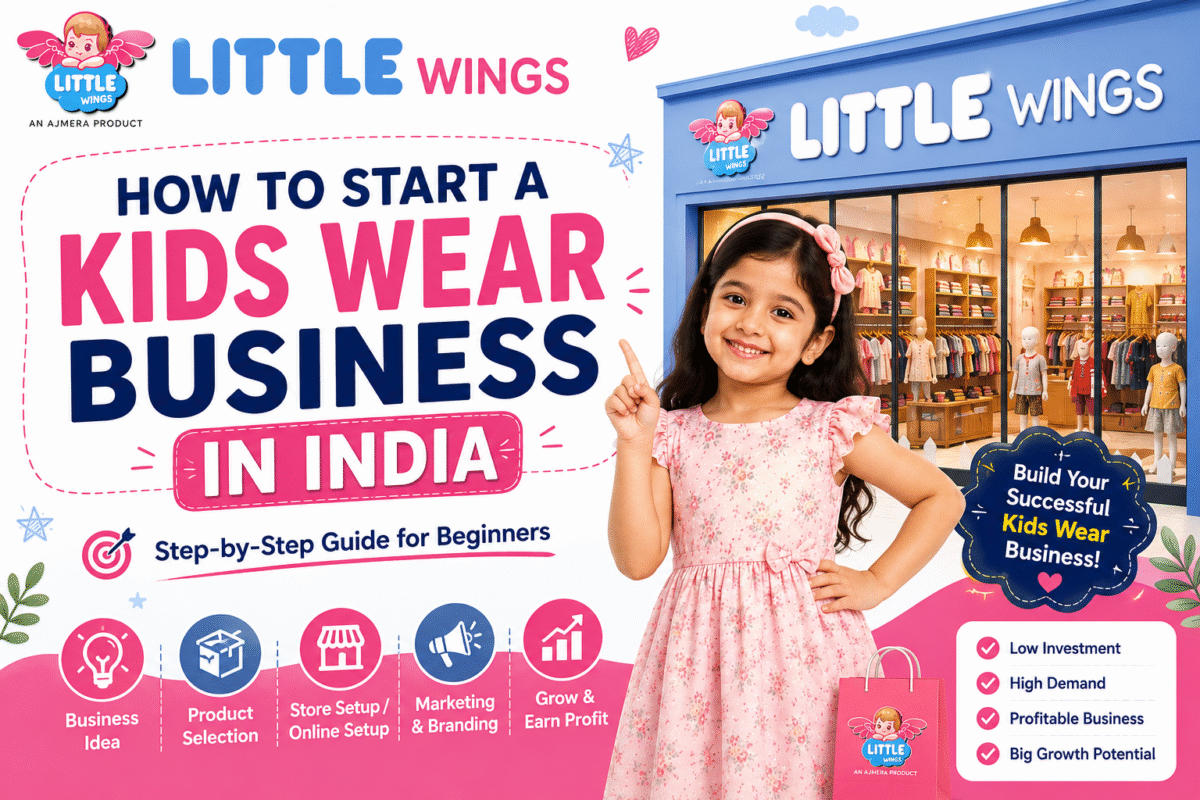
How to Start a Kids Wear Business in India

Starting a kids wear business in India can be a promising opportunity for entrepreneurs who understand what parents look for when buying clothes for their children. Kids outgrow clothes quickly, festivals, birthdays, school events and family functions create regular demand, and parents are increasingly looking for clothing that is comfortable, attractive and reasonably priced.

However, starting a successful kids wear business is not only about buying clothes and opening a shop. You need to choose the right business model, understand your customers, select reliable suppliers, manage inventory and create a strong local presence.

For entrepreneurs looking to enter the growing children’s fashion market, a structured approach can make the journey much easier. In this guide, we will explain how to start a kids wear business in India, from choosing your target market to sourcing products and building your brand.

Why Start a Kids Wear Business in India?

India has a large and diverse market for children’s clothing. Parents regularly purchase clothes for newborns, toddlers, school-going children and teenagers. Demand also increases during festivals, weddings, birthdays and other occasions.

One of the biggest advantages of the kids wear segment is repeat purchasing. Children grow quickly, so parents often need new sizes and styles within a relatively short period.

Some popular kids wear categories include:

  • Baby wear
  • Boys’ clothing
  • Girls’ clothing
  • Kids’ ethnic wear
  • Party wear
  • Casual wear
  • Festive wear
  • Dresses and frocks
  • T-shirts and shirts
  • Kids’ co-ord sets
  • Seasonal clothing

This variety allows a new business owner to select products according to the local market and available investment.

Step 1: Decide Your Kids Wear Business Model

Before investing money, decide how you want to operate your business. There are several options available in India.

You can start a kids wear retail store, where customers visit your physical shop and purchase products. This model works well in residential areas, shopping markets and locations with good family footfall.

Another option is an online kids wear business through your own website, marketplaces or social media platforms. Online selling gives you access to customers beyond your local area but requires investment in photography, marketing, logistics and customer service.

You can also consider a kids wear franchise business. A franchise model can provide an established brand identity, product range and business support, depending on the franchise company and agreement.

The right model depends on your budget, location, business experience and long-term goals.

Step 2: Understand Your Target Customers

One common mistake new business owners make is trying to sell everything to everyone.

Instead, identify your primary customer group.

For example, you could focus on:

  • Newborn and baby clothing
  • Kids aged 2–6 years
  • Kids aged 6–12 years
  • Boys’ fashion
  • Girls’ fashion
  • Premium kids wear
  • Affordable daily wear
  • Ethnic and festive kids wear

Your target customer will influence your pricing, store location, product selection and marketing strategy.

If your customers are mainly middle-income families, comfortable and affordable clothing may perform better. In a premium market, parents may be more interested in fabric quality, designs, finishing and brand presentation.

Step 3: Choose the Right Location

For a physical kids wear store, location can have a major impact on sales.

Look for areas where families regularly visit, such as residential neighborhoods, shopping streets, malls, marketplaces and areas near schools or family-oriented businesses.

Before finalizing a location, check:

  • Daily footfall
  • Nearby residential population
  • Competition
  • Parking availability
  • Shop visibility
  • Rental cost
  • Customer purchasing power
  • Nearby complementary businesses

A smaller store in the right location can sometimes perform better than a large store in an unsuitable market.

Step 4: Find Reliable Kids Wear Suppliers

Product sourcing is one of the most important parts of starting a kids wear business.

Your supplier should offer consistent quality, attractive designs, competitive pricing and dependable delivery. You should also understand their minimum order quantities, size availability and replacement policies.

India has several major textile and garment manufacturing hubs. Surat, for example, is well known for its textile and fashion manufacturing ecosystem and can be an important sourcing destination for retailers and wholesalers.

When evaluating a supplier, do not look only at the lowest price. Check fabric quality, stitching, sizing, color consistency, packaging and delivery reliability.

Building a long-term relationship with a dependable supplier can help you maintain consistent product quality as your business grows.

Step 5: Build the Right Product Mix

A successful kids wear store needs more than attractive products. It needs the right product mix.

Keep different sizes, styles and price ranges so customers have enough options.

For example, your collection could include everyday clothing as well as special-occasion products. Seasonal products can also be introduced according to demand.

Festive and wedding seasons can be particularly important for ethnic kids wear. During these periods, products such as traditional dresses, kurta sets, lehenga-style outfits and party wear can attract additional customers.

At the same time, basic everyday products can provide more consistent year-round sales.

Step 6: Decide Your Pricing Strategy

Pricing should cover your product cost, operating expenses, marketing expenses and desired profit margin while remaining competitive in your market.

Do not simply copy the pricing of another store. Compare your products based on quality, design, brand positioning and customer expectations.

You can create different price segments such as:

Budget: Affordable everyday kids wear

Mid-range: Better fabrics, designs and finishing

Premium: Special occasion and high-end collections

This approach allows you to serve different customer requirements without making your store dependent on one price category.

Step 7: Create a Strong Kids Wear Brand

If you want your business to grow beyond one store, branding becomes important.

Your brand name, store design, packaging, product presentation and customer experience should feel consistent.

A kidswear brand such as Little Wings can focus on creating a recognizable identity around children’s fashion and making shopping convenient for parents.

Your branding should communicate what customers can expect from you. For example, your positioning could focus on comfort, quality, fashionable designs, affordability or a combination of these factors.

Good branding can help turn first-time buyers into repeat customers.

Step 8: Use Digital Marketing to Attract Parents

A physical store should not depend only on walk-in customers.

Digital marketing can help you reach parents in your local area and introduce them to new collections.

Useful channels include:

  • Google Business Profile
  • Instagram
  • Facebook
  • WhatsApp Business
  • Your own website
  • Local search marketing
  • Customer referral campaigns

Post new arrivals, festive collections, offers, product videos and styling ideas regularly. High-quality product photos and short videos can make a significant difference in children’s fashion because customers want to see the design, fabric and overall appearance before buying.

WhatsApp can also be useful for sharing new collections and communicating with existing customers.

Step 9: Manage Inventory Carefully

Inventory management is especially important in kids wear because you may have several sizes for every design.

For example, one design could have multiple sizes, colors and variants. If inventory is not tracked properly, some sizes may sell quickly while others remain unsold.

Track:

  • Fast-moving products
  • Slow-moving products
  • Size-wise sales
  • Seasonal demand
  • Return rates
  • Stock value
  • New arrivals

Regularly reviewing your inventory helps you decide what to reorder and what to clear through offers.

Step 10: Focus on Customer Experience

Parents usually want shopping to be easy and convenient.

Your staff should understand children’s sizes and help customers select suitable products. The store should be clean, organized and easy to navigate.

Clear pricing, easy exchanges and responsive customer service can also encourage repeat purchases.

Remember that a kids wear business is not only about selling clothes. It is about building trust with parents.

How Much Investment Is Required to Start a Kids Wear Business?

The investment depends on the business model and scale.

A small retail shop may require investment for rent, interiors, inventory, branding, billing software and marketing. An online business may require less investment in physical infrastructure but more spending on digital marketing, photography and logistics.

A franchise model may involve a different investment structure based on the brand, store size, location and business terms.

Before investing, prepare a basic budget covering:

  • Shop or warehouse expenses
  • Initial inventory
  • Interior and display
  • Branding
  • Staff salaries
  • Technology
  • Marketing
  • Packaging
  • Working capital

Keeping sufficient working capital is important because sales may take time to stabilize after launch.

Is Kids Wear Business Profitable in India?

A kids wear business can be profitable when the product selection, pricing, location and inventory management are right. However, profitability is not automatic.

Your actual results will depend on factors such as customer demand, competition, purchase cost, selling price, stock turnover, rent and operating expenses.

Instead of focusing only on margins, monitor overall business performance. A product with a slightly lower margin but faster sales can sometimes contribute more to the business than a high-margin product that stays in inventory for months.

Common Mistakes to Avoid

New entrepreneurs can make several mistakes when entering the kidswear market.

Avoid buying too much inventory before understanding your customers. Do not select products only because you personally like the designs. Avoid ignoring size-wise demand and do not underestimate the importance of working capital.

Another common mistake is relying entirely on discounts. Your business should provide customers with a reason to return based on product quality, service, variety and trust.

Final Thoughts

Starting a kids wear business in India can be an attractive opportunity for entrepreneurs who are prepared to understand the market and build the business step by step.

Start with a clear target customer, select the right business model, source quality products, manage inventory carefully and create a strong customer experience. Combine your physical presence with digital marketing so customers can discover your products both online and offline.

Whether you choose an independent retail store, online business, wholesale operation or a franchise model, long-term success will depend on consistency and understanding what parents actually want for their children.

Little Wings aims to be part of the growing children’s fashion market by offering opportunities and solutions for entrepreneurs interested in building a kids wear business.

Frequently Asked Questions

1. Is kids wear business profitable in India?

Yes, a kids wear business can be profitable when it has the right location, product range, pricing and inventory management. Profitability depends on factors such as purchase cost, sales volume, rent and operating expenses.

2. How much money is required to start a kids wear business?

There is no single investment amount. A small store, online business, wholesale operation and franchise can all require different levels of investment. Your budget should include inventory, rent, interiors, staff, marketing and working capital.

3. What products should I sell in a kids wear store?

You can sell baby wear, boys’ clothing, girls’ clothing, casual wear, party wear, festive wear, ethnic wear, dresses, shirts, T-shirts and other children’s fashion products.

4. Where can I source kids wear in India?

You can source kids wear from established manufacturers and wholesalers across India’s textile and garment markets. Surat is one of the major textile and fashion sourcing destinations.

5. Is a physical store better than an online kids wear business?

Both models have advantages. A physical store allows customers to check sizes and products directly, while an online business can reach customers across different locations. Many businesses combine both approaches.

6. How do I choose a location for a kids wear shop?

Look for locations with strong family footfall, nearby residential areas, good visibility, parking and suitable customer purchasing power. Also compare rent and competition before signing a lease.

7. What age group should I target in kids wear?

You can focus on newborns, toddlers, young children or school-going children. Choosing a specific target group initially can make product selection and marketing easier.

8. How can I attract customers to my kids wear store?

Use local digital marketing, Google Business Profile, Instagram, WhatsApp, referral campaigns and attractive in-store displays. Regularly promote new collections and seasonal products.

9. How important is inventory management in kids wear?

Inventory management is extremely important because children’s clothing has multiple sizes, colors and designs. Tracking fast-moving and slow-moving products can reduce unsold stock and improve cash flow.

10. Can I start a kids wear business through a franchise?

Yes, a franchise can be an option for entrepreneurs who prefer working with an established brand and a structured business model. Before investing, carefully review the franchise investment, support, product sourcing, terms and expected operating costs.

Contact Little Wings

If you are exploring opportunities in the kids wear business or want to know more about Little Wings, you can contact the team directly.

Little Wings
Ground Floor, Surana 101, G-1, Sahara Darwaja Ring Rd, Umarwada, Surat, Gujarat 395002

Email: info@littlewings.co
Phone: +91 9662064475

Kids Wear Business Profit Margin

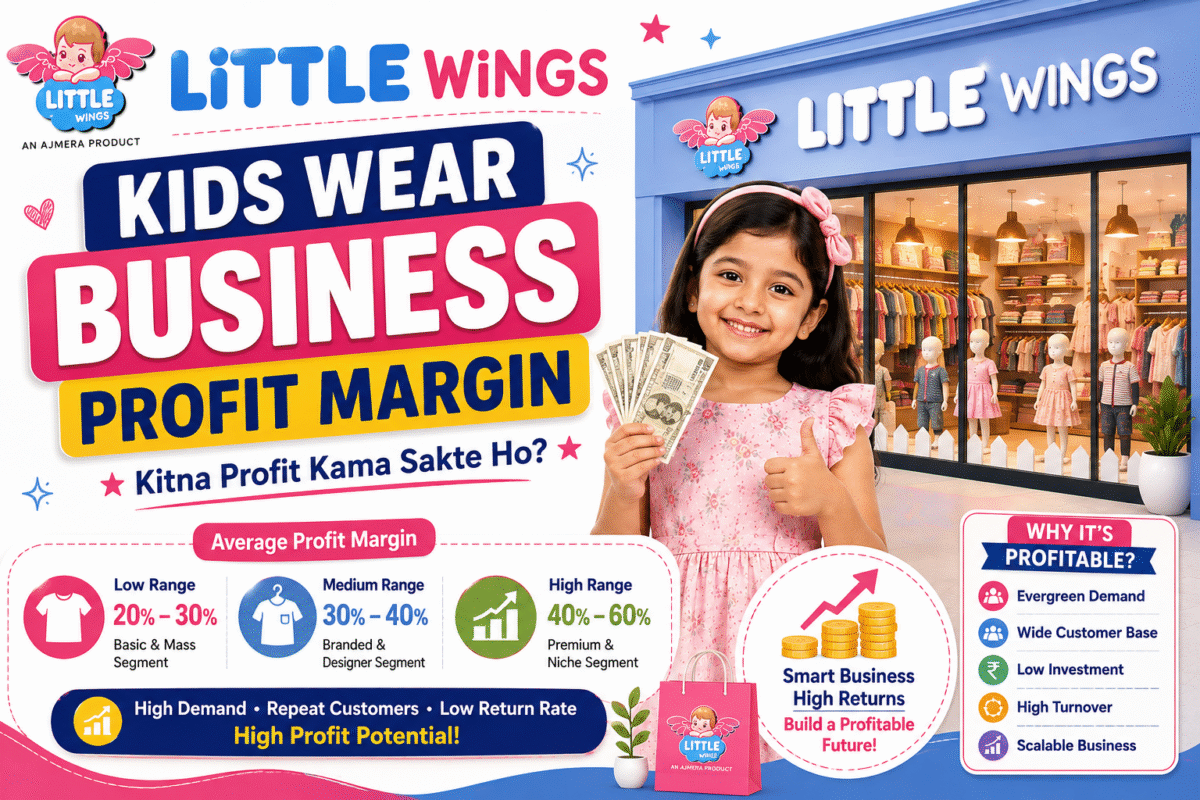
Kids Wear Business Profit Margin: A Practical Guide for Starting a Profitable Kids Clothing Business

The kids wear market has become an attractive business opportunity for retailers, wholesalers, franchise owners, and entrepreneurs. Parents regularly purchase clothes for their children because kids outgrow their clothes quickly, seasonal requirements keep changing, and there is always demand for comfortable and fashionable outfits.

But one important question comes to mind before starting the business: What is the kids wear business profit margin?

The answer depends on several factors, including your purchase price, selling price, product category, location, store expenses, inventory management, and sales volume. A business selling kids wear at a good margin can still make low profits if operating costs are too high. Similarly, a business with moderate margins can generate strong profits when it has good sales volume and controlled expenses.

In this guide, we will understand how kids wear business profit margins work and what you can do to build a sustainable and profitable kids clothing business.

What Is the Profit Margin in a Kids Wear Business?

Profit margin is the amount left from your sales after deducting the cost of the product and other business expenses.

For example, suppose a kids’ outfit is purchased for ₹500 and sold for ₹900.

The gross profit is:

₹900 – ₹500 = ₹400

The gross profit margin is approximately:

₹400 ÷ ₹900 × 100 = 44.4%

However, this is the gross margin, not your final business profit. You still need to consider rent, salaries, electricity, marketing, packaging, transportation, discounts, taxes, damaged stock, and other expenses.

In the kids wear business, the actual profit can therefore be very different from the initial product markup.

What Is a Good Kids Wear Business Profit Margin?

There is no single fixed profit margin that applies to every kids wear business.

A retailer may aim for a healthy gross margin by purchasing products at competitive wholesale prices and selling them at suitable retail prices. The final net profit depends on how efficiently the business is operated.

Some products may offer better margins than others. For example, fashion-focused dresses, party wear, ethnic wear, designer-inspired outfits, and coordinated sets may have different pricing opportunities compared with basic everyday clothing.

The key is not simply to look for the product with the highest margin. You should look for a combination of:

  • Good demand
  • Competitive purchase price
  • Healthy selling price
  • Fast inventory movement
  • Low return or damage rate
  • Repeat customers
  • Controlled operating costs

This combination can make a significant difference to the overall profitability of your kids wear business.

Gross Profit Margin vs Net Profit Margin

One of the most common mistakes new business owners make is confusing gross profit with net profit.

Gross profit is calculated after subtracting the product purchase cost from your sales revenue.

Net profit is what remains after paying all major operating expenses.

For example:

Particular Amount
Selling Price ₹1,000
Product Cost ₹550
Gross Profit ₹450
Rent & Utilities Allocation ₹100
Staff Cost Allocation ₹70
Marketing & Other Expenses ₹50
Approx. Net Profit ₹230

This is only an example to explain the calculation. Actual figures will vary from business to business.

Understanding this difference helps you set realistic sales targets.

Factors That Affect Kids Wear Business Profit Margin

1. Product Sourcing Cost

Your purchase price directly affects your gross margin. Buying from a reliable manufacturer or wholesale supplier can help you maintain competitive product costs.

When your sourcing is efficient, you have more flexibility in setting retail prices without making your products too expensive for customers.

2. Product Category

Kids wear is a broad category. It can include:

  • Baby clothing
  • Girls’ dresses
  • Boys’ clothing
  • Ethnic wear
  • Party wear
  • Casual wear
  • T-shirts
  • Shirts
  • Frocks
  • Co-ord sets
  • Kids’ festive collections
  • Seasonal clothing

Different categories have different demand levels, purchase prices, and selling prices.

3. Location of Your Store

Location plays an important role in retail profitability. A store in a high-footfall market may generate more sales but can also have higher rent.

A lower-rent location with good local demand can sometimes provide better overall profitability than an expensive location.

4. Inventory Management

Unsold inventory can reduce your actual profit.

Kids fashion changes frequently, and seasonal products can lose their appeal after a particular season. Therefore, it is important to monitor which products sell quickly and which products remain on the shelves.

Fast-moving inventory helps improve cash flow and reduces the need for heavy discounts.

5. Discounts and Offers

Discounts can help increase sales, but excessive discounting can reduce your margins.

Instead of offering discounts on every product, retailers can use selected products for promotional offers while maintaining better margins on other products.

6. Brand Positioning

Customers do not always purchase based only on price. Product presentation, quality, designs, packaging, store experience, and brand trust can influence buying decisions.

A well-positioned kids wear business can potentially achieve better pricing than a store competing only on low prices.

How to Increase Profit in a Kids Wear Business

Increasing profitability does not always mean increasing product prices.

There are several practical ways to improve your overall business performance.

Buy According to Demand

Study your sales data regularly. Identify which sizes, designs, colours, and categories are moving quickly.

Instead of buying large quantities of every design, increase your purchases of products that consistently perform well.

Maintain a Balanced Product Mix

A successful kids wear store should have products for different budgets.

You can maintain entry-level products for price-sensitive customers while also offering premium and fashion-focused collections for customers looking for something special.

This gives customers more options and helps improve the average order value.

Focus on Repeat Customers

Parents are repeat buyers because children continuously need new clothing as they grow.

Collect customer information ethically and use it to communicate new collections, seasonal offers, and relevant products. Building long-term customer relationships can be more valuable than depending entirely on new customers.

Improve Visual Merchandising

Kids clothing should look attractive and easy to explore.

Organise products by age group, size, category, and occasion. A clean and attractive store can make shopping easier for parents and encourage additional purchases.

Sell Through Multiple Channels

A modern kids wear business does not have to depend only on a physical store.

You can explore:

  • Physical retail
  • WhatsApp enquiries
  • Social media
  • Online marketplaces
  • Your own website
  • Franchise retail
  • Wholesale distribution

Multiple sales channels can help you reach customers beyond your immediate location.

Is Kids Wear a Profitable Business?

Yes, kids wear can be a profitable business when demand, product selection, pricing, inventory, and operating expenses are managed properly.

However, profitability should not be judged only by the margin on individual products.

For example, a product with a high margin that sells once a month may contribute less to your business than a product with a slightly lower margin that sells every week.

This is why experienced retailers focus on margin plus sales volume plus inventory turnover.

The right combination can create a stronger and more stable business.

Why Choose Little Wings for Kids Wear Business?

Little Wings focuses on the kids wear segment and aims to provide products suitable for modern children’s fashion requirements.

For entrepreneurs looking to enter the kids clothing market, working with a reliable kids wear brand, manufacturer, or supplier can make product sourcing easier.

A strong product range, consistent quality, attractive designs, and reliable supply can help retailers focus more on sales and customer relationships.

Before starting your business, it is also important to understand your local market, target customer, investment capacity, store size, expected monthly expenses, and preferred product categories.

Final Thoughts

The kids wear business profit margin depends on much more than the difference between buying and selling prices. Product sourcing, pricing strategy, inventory turnover, store expenses, customer retention, and sales volume all influence the final profitability of the business.

If you are planning to start a kids clothing business, begin by understanding your market and calculating your numbers carefully. Decide how much you can invest in inventory, estimate your monthly operating costs, and set realistic sales targets.

The goal should not simply be to sell kids wear at a high margin. The real goal is to build a business where products sell consistently, customers return, inventory moves efficiently, and expenses remain under control.

With the right product mix and business strategy, kids wear can become a strong opportunity for retailers and entrepreneurs looking to build a long-term fashion business.

Frequently Asked Questions About Kids Wear Business Profit Margin

1. What is the average profit margin in a kids wear business?

There is no fixed average margin for every kids wear business. Gross margins can vary depending on the product, sourcing cost, selling price, brand positioning, and market. Net profit will be lower after operating expenses.

2. Is kids wear business profitable in India?

Kids wear can be profitable in India because children’s clothing has recurring demand. Profitability depends on location, product selection, pricing, inventory management, and operating costs.

3. What is the difference between markup and profit margin?

Markup is generally calculated based on the product cost, while profit margin is calculated based on the selling price. They are not the same percentage.

4. Which kids wear products can have better margins?

Fashion-oriented products, festive wear, party wear, dresses, ethnic outfits, and coordinated sets can offer different pricing opportunities. However, actual margins depend on sourcing and market demand.

5. How can I increase my kids wear business profit?

You can improve profitability through better sourcing, smart inventory planning, appropriate pricing, reducing unnecessary expenses, increasing repeat purchases, and focusing on fast-moving products.

6. Does wholesale sourcing improve kids wear profit margins?

Wholesale sourcing can provide competitive product costs, especially when purchasing suitable quantities from reliable suppliers. However, the final margin still depends on your selling price and business expenses.

7. How much inventory should I keep in a kids wear store?

Inventory requirements depend on store size, product range, customer demand, budget, and sales volume. It is generally better to monitor inventory turnover instead of keeping excessive stock.

8. Can I sell kids wear online as well as offline?

Yes. A kids wear business can use physical retail along with websites, social media, WhatsApp, marketplaces, and other digital sales channels.

9. How important is repeat business in kids wear?

Repeat business is highly valuable because children regularly need new clothing as they grow and as seasons or occasions change. Good products and customer service can help build long-term relationships.

10. How can I get started with a kids wear business?

Start by researching your local market, deciding your target customer, estimating your investment and monthly expenses, selecting reliable suppliers, choosing your product categories, and preparing a clear pricing and inventory strategy.

Contact Little Wings

If you are looking for more information about kids wear products, business opportunities, or sourcing, you can contact Little Wings directly.

Little Wings
Ground Floor, Surana 101, G-1, Sahara Darwaja Ring Rd, Umarwada, Surat, Gujarat 395002

Email: info@littlewings.co
Phone: +91 9662064475

Whether you are planning a new kids wear store or looking to expand your existing clothing business, understanding your costs, margins, and customer demand is the first step toward building a sustainable business.